
Stanford Continuing Studies Summer Courses 2026

Stanford Continuing Studies Logo
Summer 2026
Welcome Letter
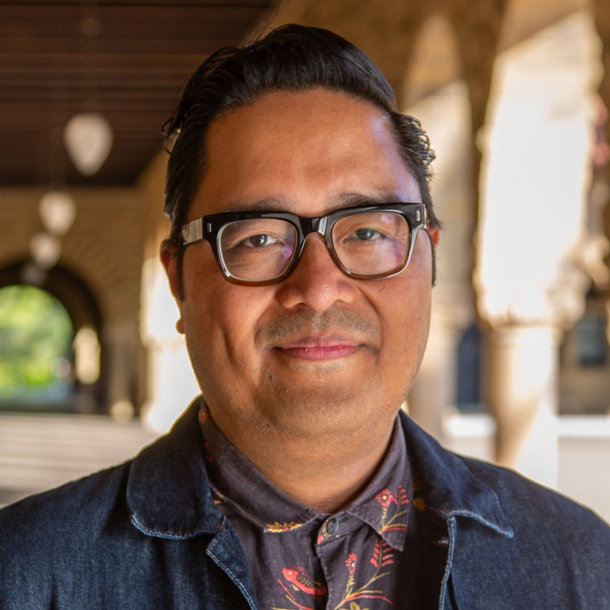
Nate Boswell headshot

Welcome Letter

Dear Friends,
S

ummer is often the time of year when we step a little outside the routines that shape the rest of our lives. In my family, we try to travel and spend the kind of quality time together that can feel elusive during the year’s usual pace. My favorite days, though, are the slower ones—early mornings outside, the occasional fishing trip with my sons, and long evenings recovering from too much sun with a new board game spread across the table. Somehow, the days feel less scheduled, and curiosity has more room to wander. Even those board games become a way to try something new.

That same spirit of exploration runs through this summer’s Continuing Studies catalog. You might step into the world of Jane Austen and trace her rise from Sense and Sensibility to Mansfield Park. You could explore the lives of Henry VIII’s six wives, journey back to the Seven Wonders of the Ancient World, or try your hand at watercolor painting or ingredient-driven cooking. Writers may find themselves drawn to courses like The Short Story for Absolute Beginners, Genealogy of the Spirit, or From Writer to Author: Navigating the Twisty Path to Publication.

For those eager to explore AI, several courses examine emerging technologies—from Wireless for the AI Age and Harnessing the Power of AI Agents to Demystifying AI, which continues our collaboration with the Stanford Institute for Human-Centered Artificial Intelligence.

Summer learning can be intentional, but it doesn’t need to lead anywhere specific. It can begin as a small experiment—a new subject or fresh perspective—and evolve into a more lasting experience, often shared with others. Our instructors, drawn from Stanford’s faculty and a wide range of accomplished practitioners, create courses that, like the board games my family loves, invite discovery, conversation, and the simple pleasure of following an idea. Only here, nobody loses!

Whether you’re traveling or staying close to home, we wish you well and hope you’ll take the opportunity to connect and try something new this summer. And with courses offered both on campus and online, you can join us from wherever the season finds you.

We look forward to seeing you in class!

Warmly,
Nate Boswell signature

Nate Boswell
Assistant Dean, Stanford Continuing Studies
Table of Contents

Table of Contents

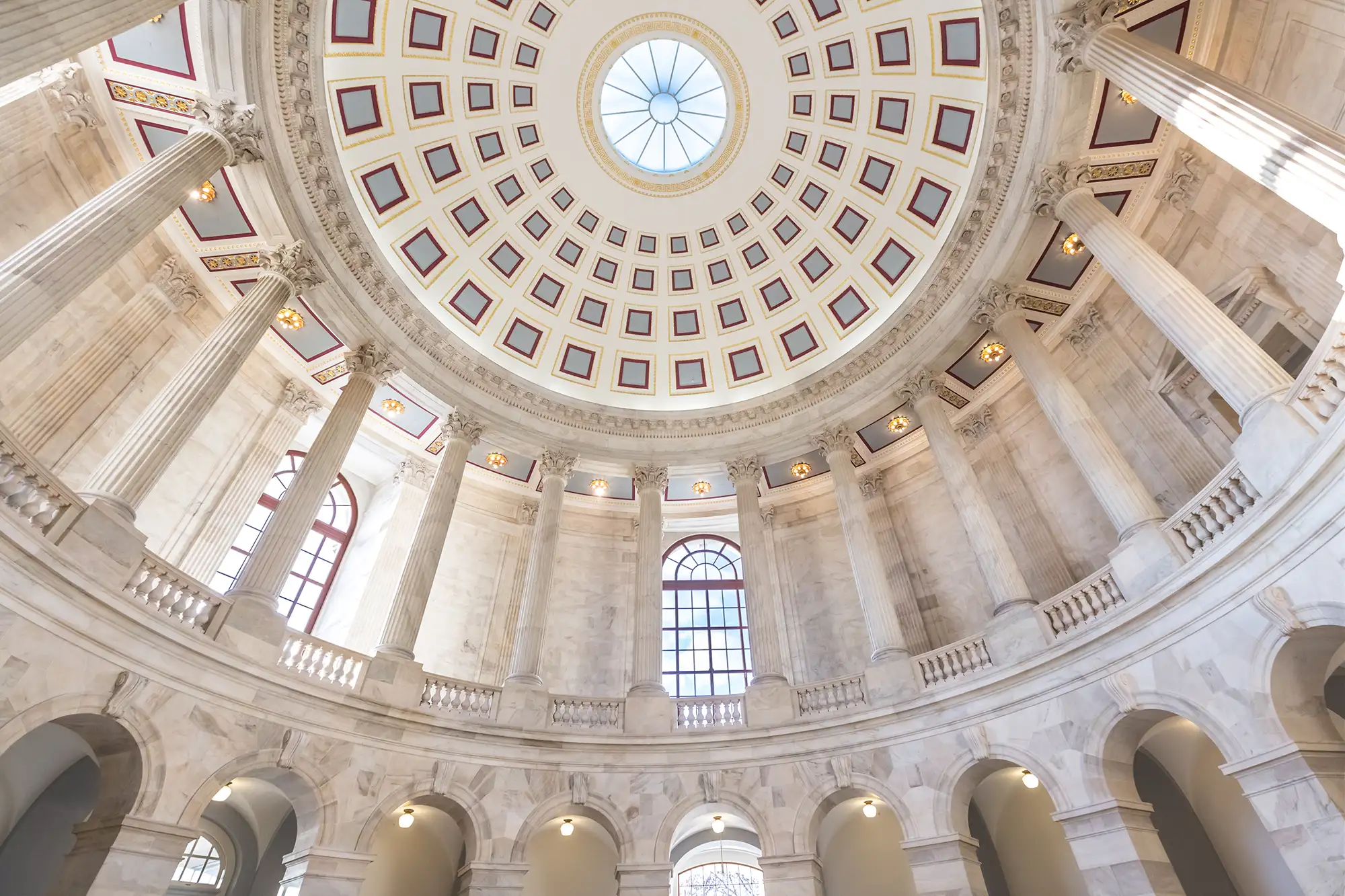
A low-angle view of a grand marble rotunda featuring a high domed ceiling with a central skylight, ornate geometric patterns, and massive fluted columns surrounding an upper gallery.
Liberal Arts & Sciences

Immerse yourself in the liberal arts to awaken your creativity, enhance your critical thinking abilities, and gain a deeper understanding of our complex world.
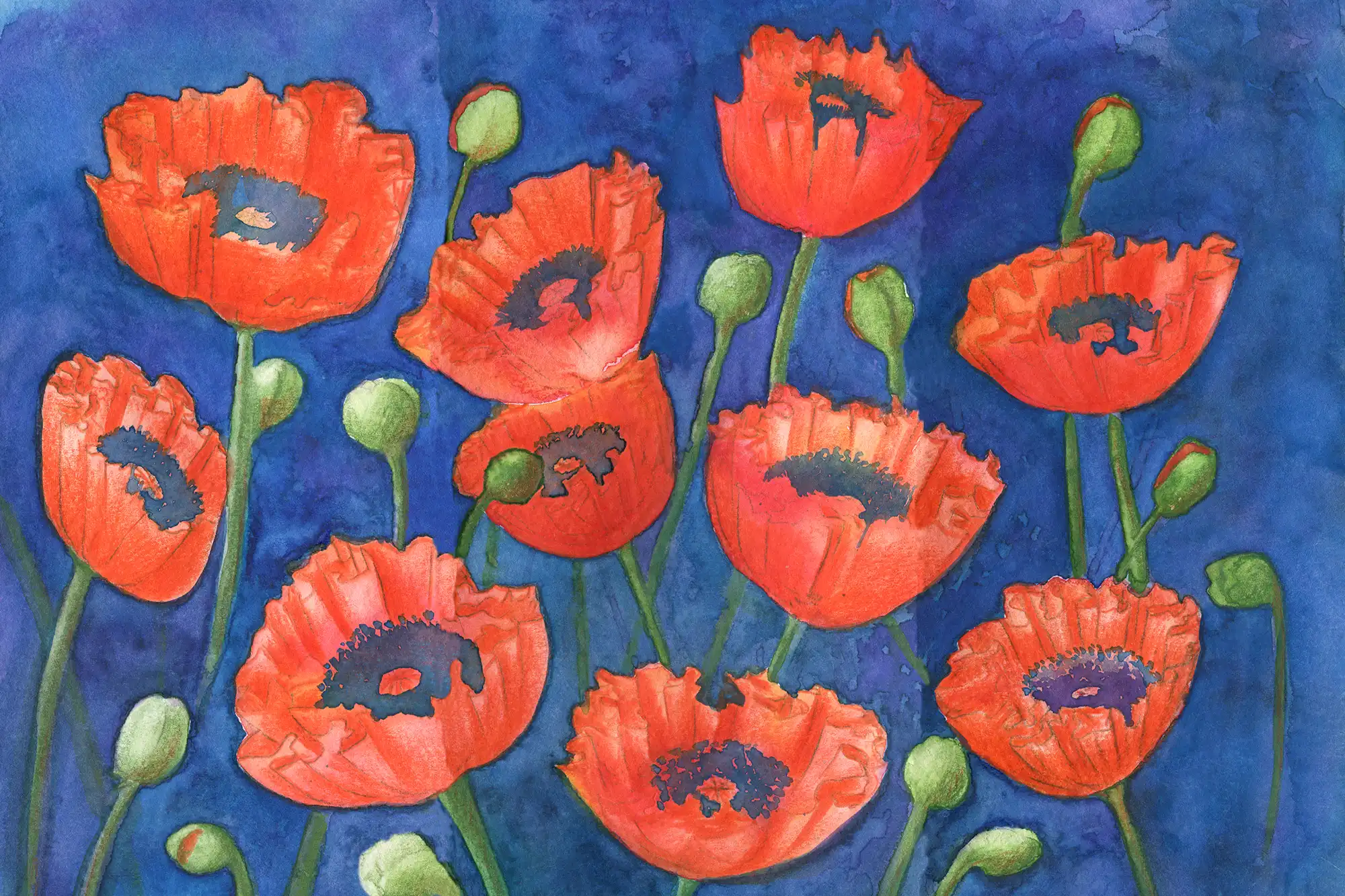
A vibrant watercolor painting of bright red poppies with dark centers and green buds. The flowers are set against a deep blue, textured background with visible brushstrokes and ink outlines.
Art Studio

Reignite your capacity for creativity in an art studio course.
A collection of fresh produce for pickling, featuring glass jars, baby carrots, cherry tomatoes, cucumbers, and a red bell pepper. Small bowls of spices and herbs sit on a wooden cutting board.
Food & Drink

Indulge your taste buds in a culinary journey through our Food & Drink courses.
A stack of smooth, balanced stones sits in the center of calm water, creating gentle ripples. A bright sun sets on the horizon, casting a warm yellow glow over the peaceful blue sky.
Wellness & Health

Prioritize your health and wellness with courses designed to help you build healthy habits and support your mental and emotional well-being.
A vintage cream-colored typewriter sits on a wooden desk with a blank sheet of white paper inserted. The background is a solid, light teal color with a soft vignette effect.
Creative Writing

Whether you’re just beginning to write or putting the finishing touches on your first novel, our writing courses offer expert instruction from accomplished authors, individual attention, and supportive feedback.
A creative digital illustration of hundreds of small, colorful speech bubbles clustering together to form the shape of one large speech bubble against a dark grey background.
Communication

Hone your communication skills and learn how to convey a clear, compelling, and consistent message.
Colorful sticky notes arranged densely on a wall or board, representing brainstorming, creative planning, and design thinking.
Design

Design is more than aesthetics. It’s a powerful approach to shaping how we live, work, and solve problems.
A magnifying glass centered over a bar chart, surrounded by various colorful icons of graphs and data visualizations on a light blue background, symbolizing data analysis.
Business

Our business courses will equip you with the knowledge and skills you need to succeed in building your career, launching a startup, or growing a business.
A digital illustration of a complex blue circuit board pattern with glowing nodes and interconnecting lines, representing high-tech data processing and connectivity.
Technology

Embark on a journey through artificial intelligence, master a new coding language, or dive into the world of data science.
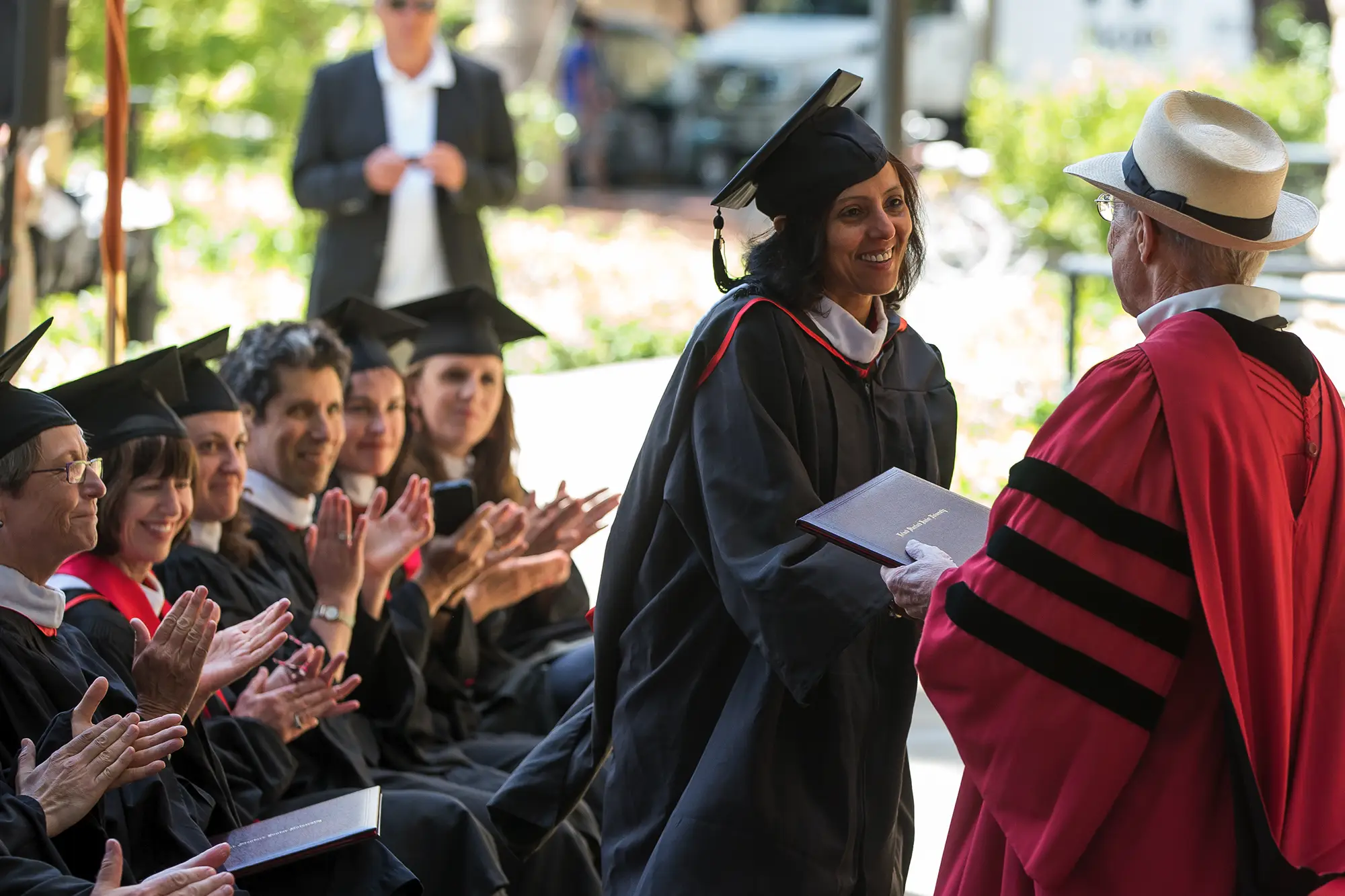
Stanford MLA Graduate shaking hands
Master of Liberal Arts

Start your next chapter with a part-time, evening graduate degree in the liberal arts.
Summer Spotlight

Learn AI This Summer

AI is transforming how we work, build, and innovate. This summer, explore the technologies reshaping our world—from AI-driven product development and autonomous agents to vibe coding and the wireless systems powering modern intelligence. Designed for curious learners and professionals alike, these courses offer hands-on tools, real-world insights, and accessible frameworks to help you understand AI, apply it in your work, and stay ahead in a rapidly evolving landscape.
Featured Courses

Featured Courses

Liberal Arts & Sciences

Liberal Arts & Sciences

Immerse yourself in the liberal arts to awaken your creativity, enhance your critical thinking abilities, and gain a deeper understanding of our complex world. From fine arts to film, language to literature, philosophy to history, explore a rich array of courses in the liberal arts and sciences.

Archaeology

Patrick Hunt
Former Director, Stanford Alpine Archaeology Project; Research Associate, Archeoethnobotany, Institute of EthnoMedicine
What made certain monuments so extraordinary that ancient writers called them “wonders”? This course explores the legendary Seven Wonders of the Ancient World—from the Great Pyramids of Egypt to the Statue of Zeus at Olympia and the Mausoleum at Halicarnassus—as powerful expressions of religion, mythology, art, and science.

Architecture

Brittany Forniotis
Art Historian
The Renaissance is often associated with familiar Italian icons such as Brunelleschi’s dome or Michelangelo’s ceilings, yet the spirit of renewal that transformed Italy between 1400 and 1600 reshaped societies far beyond Europe. This course explores the Renaissance as a global phenomenon, examining how builders from Russia to Southeast Asia adapted classical forms and local traditions to express power, belief, and cultural identity.

Art History

Patrick R. Crowley
Associate Curator of European Art, Cantor Arts Center, Stanford
This course provides an in-depth survey of Roman art and architecture, tracing Rome’s evolution from a small village to a vast empire. Explore diverse topics such as Roman building techniques, the influence of Greek art, the politics of portraiture, the destruction of Pompeii, and architectural masterpieces like the Colosseum and the Pantheon, while considering how these elements reflect broader historical and cultural changes.

Classics

Barbara Clayton
Independent Scholar
Plato’s Republic is one of the most influential works in the Western canon, shaping debates about politics, justice, and human flourishing for more than two millennia. Through close reading and discussion, this course examines Plato’s most enduring ideas, including the Theory of Forms, the Allegory of the Cave, and his reflections on truth, knowledge, and reality.

Climate Change & Sustainability

Zachary Kaufman
Postdoctoral Scholar, Scripps Institution of Oceanography and Temple University
What will Earth look like in 50 or 100 years? This course goes beyond the basics of global warming to explore the deeper mechanics of the climate system through real-world observations and cutting-edge simulations. Learn how scientists forecast future change—and what those projections reveal about our planet’s most vulnerable regions. Topics include the greenhouse effect, natural climate fluctuations such as the ice ages, and recent shifts like the rapid decline of Arctic sea ice.

Cultural Studies

Arthur Chait
Former Adjunct Professor, Notre Dame de Namur and Menlo College
For centuries, seven unassuming materials have formed the backbone of our world: silicon, glass, steel, aluminum, copper, plastics, and concrete. This course examines the science and history of each material, weighing their benefits as well as environmental and supply chain challenges today. Gain an introduction to rare earth minerals and the obscure substances that quietly but decisively shape the modern world.

Patrick Hunt
Former Director, Stanford Alpine Archaeology Project; Research Associate, Archeoethnobotany, Institute of EthnoMedicine
Ancient physicians asked many of the same questions about health and disease that we do today. This course explores the development of medicine in the ancient world, examining figures such as Hippocrates and Galen alongside evidence from Egyptian papyri, Babylonian tablets, and even Ötzi the Iceman to reveal the surprising sophistication of early medical thought and practice.

Dance Studies

Ronnie Reddick
Lecturer, Department of Theater & Performance Studies, Stanford
Have you ever been interested in dancing hip hop but felt afraid to give it a go? Here’s a chance to learn one of the world’s most popular dance forms effortlessly and enjoyably with a renowned teacher and choreographer. This course is designed to introduce beginning students to hip hop’s vibrant expression of creativity, rhythm, and individuality in a fun and interactive setting.

Film Studies

Mick LaSalle
Film Critic Emeritus, San Francisco Chronicle
Step into Hollywood’s provocative pre-Code era through films such as Baby Face, Strangers May Kiss, Waterloo Bridge, The Animal Kingdom, and Downstairs. Explore how early 1930s cinema challenged social norms before censorship reshaped the industry.

Elliot Lavine
Film Historian and Filmmaker
Film noir burst onto American screens in the 1940s with its shadowy visuals, psychological tension, and sense that nothing is quite what it seems. Through screenings and discussion of more than 20 films—from The Lady from Shanghai to Out of the Past—this course explores how noir captured the fatalistic mood of mid-century America.

History

Margo Horn
Former Lecturer, Department of History, Stanford
Women’s control over their reproductive lives has long been a subject of public debate and political struggle. Examining changing ideas about sexuality, the rise of contraception and abortion regulation, and the activism of figures such as Emma Goldman and Margaret Sanger, this course explores the social movements and legal debates that have shaped reproductive rights.

Elaine Treharne
Roberta Bowman Denning Professor of Humanities, Stanford
“Divorced, beheaded, died; divorced, beheaded, survived”—the famous rhyme captures the fates of Henry VIII’s six wives but not their remarkable influence. This course explores the lives of the three Katherines, two Annes, and one Jane who shaped Tudor politics, religion, culture, and court life while leaving an enduring mark on English history.

International Studies

Marwan Hanania
Historian
Why does the Middle East remain at the center of global headlines more than a century after the fall of the Ottoman Empire? This course traces the major forces that shaped the modern region—from the creation of colonial mandates and new states after World War I to the rise of Arab nationalism, political Islam, and the conflicts and diplomatic challenges that continue to shape the Middle East today.

Languages

Heather Howard
Advanced Lecturer in French, Stanford
Designed for students with little to no knowledge of French, this course focuses on acquiring basic communication skills using a creative, all-in-French conversational approach in a fun and relaxed class atmosphere.

Maria Cristina Urruela
Former Lecturer in Spanish, Stanford
It’s time to speak Spanish with confidence! This immersive course is your gateway to oral proficiency and comprehension, offering a vibrant exploration of the Spanish-speaking world and its rich cultures.

Maria Cristina Urruela
Former Lecturer in Spanish, Stanford
Designed for students who can already interact socially in Spanish, this course develops more advanced conversational skills. Students practice expressing opinions, discussing past and present interests and activities, describing professional plans, addressing health-related topics, and beginning to narrate past events.

Literature

Rebecca Richardson
Advanced Lecturer, Program in Writing and Rhetoric, Stanford
Jane Austen’s early novels established the voice and vision that would make her one of literature’s most beloved authors. This course revisits Sense and Sensibility, Pride and Prejudice, and Mansfield Park, examining how these works reveal Austen’s evolving narrative craft and her sharp insight into character and society.

Carolyn Sinsky
Independent Scholar and Writer
Few works of literature draw us into the depths of the human mind like Hamlet, Shakespeare’s haunting exploration of grief, vengeance, and the fragile work of self-understanding. This course takes a deliberate, immersive approach to Hamlet, tracing its emotional and philosophical undercurrents and considering how its questions continue to resonate today.

Mathematics

Margot Gerritsen
Professor of Energy Resources Engineering, Emerita, Stanford
Computational mathematics underlies many technologies that shape modern life. This course revisits foundational mathematical concepts and examines how algorithms, models, and data analysis are used to rank information, simulate complex systems, and generate predictions across fields such as science, business, and public policy.

Medicine

David Armenta
Lecturer, Department of Biology
Cancer remains one of the most challenging diseases to treat worldwide. This course introduces the biology of cancer and the scientific principles behind modern therapies, exploring emerging approaches such as CAR T-cell immunotherapy, tumor microenvironment targeting, and biomarker-guided treatments that are shaping the future of personalized cancer care.

Clyde Wilson
Research Associate, Biochemistry, UC San Francisco
Dig into the scientific literature surrounding the impact of human movement on various aspects of health and fitness, including immunity, sleep, energy, metabolism, and psychological well-being. Learn how to tailor exercise routines to specific goals and develop personalized programs based on a deeper understanding of anatomy, neural control of movement, muscle physiology, and recovery processes.

Bruce Fogel
Adjunct Professor Division of Clinical Anatomy, Department of Surgery, Stanford Medicine
Cheyenne Sonntag
Clinical Assistant Professor, Department of General Surgery, Stanford Medicine
Beth Habelow
Lecturer, Division of Clinical Anatomy, Stanford Medicine
Explore cadaver specimens and digital technologies used by Stanford medical students and surgeons in the treatment and care of patients. Students will learn how to identify anatomical structures and common clinical conditions affecting the organs of the thorax and the chest wall.

Music Studies

Kip Cranna
Dramaturg Emeritus, San Francisco Opera
When we think of opera, European composers such as Mozart, Verdi, and Puccini often come to mind. While opera in the US initially followed European traditions, it soon developed a voice of its own. This course traces the emergence of a distinctly American operatic style, exploring how composers from Scott Joplin and George Gershwin to Philip Glass and other contemporary innovators have adapted the operatic tradition to express American history and cultural identity.

Christopher Hepburn
Lecturer, Southern Methodist University
How did K-pop become a global cultural phenomenon? This course traces the rise of South Korean popular music from a tightly managed domestic industry to an international force, exploring its production systems, digital fan cultures, and growing role in shaping global media and cultural influence. Case studies include music videos and media such as KPop Demon Hunters, which playfully blends idol culture with mythology and genre storytelling.

Theresa Iker
Lecturer, Department of History, Stanford
Whether you love her or criticize her, it’s undeniable that Taylor Swift has become a cultural, economic, and political powerhouse. This course, modeled on one offered to Stanford undergraduates, takes a historical approach to Swift’s career. We’ll explore the forces behind her rise to superstardom and her impact on millennial America, covering topics such as the politics of country music, race and class dynamics, and feminist critiques.

Music Studio

Greg Vaughan
Instructor, Gryphon Stringed Instruments
Unleash your inner musician and dive into the enchanting world of the ukulele. This introductory course will equip you with the essential skills to play this fun instrument, from mastering uke chords and strumming techniques to exploring basic fingerpicking and rhythm.

Philosophy

Frederick Dolan
Professor of Rhetoric, Emeritus, UC Berkeley
This course examines faith, hope, and love as enduring human responses to uncertainty, loss, and the search for meaning. Explore how philosophers, including Søren Kierkegaard, Ernst Bloch, and Harry Frankfurt, have interpreted these virtues both within and outside of religious frameworks.

Richie Kim
Lecturer, Department of Philosophy, Stanford
What makes you you? This course explores major philosophical debates about personhood, identity, and the nature of the self—from John Locke’s theory of identity over time to contemporary questions about consciousness, mind uploading, and whether any genuine self exists at all.

Psychology

Marwa Azab
Adjunct Professor of Psychology, CSU Long Beach
Stress can act as a “double agent”—sharpening focus and performance at times while undermining mental and physical health at others. Drawing on insights from neuroscience and psychology, this course explores the science of stress and its surprising role in human performance, showing how short bursts can enhance focus and memory—and how to manage chronic stress for healthier, more resilient living.

Sports

Andy Dolich
President, Dolich Consulting
The global sports industry is a vast and complex ecosystem of competition, capital, and culture. This course explores how professional and amateur sports systems operate—from media rights and league structures to the evolving landscape of college athletics—while offering practical insight into career pathways, hiring practices, and opportunities across the industry.

Art Studio

Art Studio

Reignite your capacity for creativity in an art studio course. From drawing and photography to creating your own podcast or video, our courses will help you develop your skills and find inspiration that will truly elevate your creative expression.

Audio, Video & Film

Digant Kasundra
Founder, Dead Set Films
This course is designed for beginners to learn the fundamentals of video creation, covering scriptwriting, storyboarding, shooting, and editing techniques using DaVinci Resolve. Students will analyze professional films and commercials, apply filmmaking strategies, and ultimately produce and publish their own short video.

Laura Joyce Davis
CEO and Co-Founder, Narrative Podcasts
Have you ever marveled at the mesmerizing narratives in your favorite podcasts and wondered how they’re crafted? Learn how to transform stories into captivating podcast episodes through the use of scriptwriting, narration, audio editing, and sound design. Gain hands-on experience with audio editing tools and leave the course with a toolkit of techniques to enhance your future podcasting projects.

Drawing, Painting & Other Media

Trevor Tubelle
Artist
Break free from realism and explore the imaginative, conceptual world of abstraction. In this course, we will use a variety of strategies—from highly structured plans to wildly spontaneous accidents—to examine what it means to create abstract art. Experiment with various drawing materials (pens, pencils, and sumi ink and brush, among others), techniques, and strategies, including gesture drawing, collage, mixed media, and chance.

Lauren Toomer
Lecturer, Department of Art & Art History and Division of Clinical Anatomy, Stanford
Inspired by Stanford’s Art and Anatomy program, this drawing-based course offers a focused study of the human figure through the sculptures of Auguste Rodin. We’ll begin with an introduction to Rodin’s artistic process and the anatomical principles underlying his work. Using Rodin’s figures alongside anatomical references, we’ll examine skeletal landmarks, major muscle groups, and the expressive distortions that give his sculptures their emotional force.

Amy Elkins
Artist and Arts Educator
Creativity, like any meaningful habit, thrives through daily practice. In this course, we will reignite our creative selves through in-class exercises, art sharing, and guided daily prompts. Students will experiment with a range of media to explore themes including identity, endurance, memory, and grief.

John Peck
Instructor, Triton Museum of Art
Join us on a journey where we strive to master the art of capturing the human form with unparalleled realism, harnessing people’s essence, strength, and elegance. Skillfully sketch the human figure as you immerse yourself in the world of observation, where every stroke of the pencil unveils a deeper understanding of our intricate selves.

Erin Gleeson
Illustrator and Cookbook Author
This hands-on course introduces beginners to the art of watercolor painting through the vibrant colors and forms of seasonal fruits, vegetables, and flowers. Students will learn foundational techniques such as wet-on-wet blending, color mixing, layering, and texture building. They will then apply these skills to create expressive, nature-inspired compositions rooted in the beauty of seasonal produce.

Ann Miller
Fine Artist, Calligrapher, and Designer
This course introduces Nōtan, the Japanese principle of light and dark, as an accessible framework for exploring visual structure in text, letterform, and pattern. Working primarily in black and white, students will learn how shape and space interact to create rhythm, contrast, and visual interest—principles that extend to design, photography, and other visual arts.

Joshua Moreno
Lecturer, Department of Art & Art History, Stanford
Embark on a creative journey through the timeless art of watercolor painting. This hands-on course introduces fundamental techniques, tools, and principles of watercolor painting. Achieve different effects and textures by experimenting with various watercolor techniques, including wet-on-wet, dry brush, and glazing. Learn to mix and blend pigments to create vibrant and harmonious compositions.

Photography

Yoni Mayeri
Photographer, Artist, and Educator
Learn to turn your everyday iPhone photos into stunning pictures. Explore the built-in Photos app for editing and enhancing images, optimize the features of the native camera, and discover third-party editing applications and accessories to enhance your images.

Joel Simon
Documentary and Fine Art Photographer
John Lambert
Photographer
What story is more consequential than your own life? This course invites you to photograph your life with intention, framing the moments that give it meaning. Create new images using family gatherings, children’s artwork, shared meals, beloved pets, and the spaces that shape our lives. Examine how photographs construct meaning through composition, light, and visual structure, applying these principles in guided assignments and feedback.

Joel Simon
Documentary and Fine Art Photographer
Discover the extraordinary in the everyday through close-up photography. In this hands-on course, you’ll learn how light, composition, and scale work together to transform intimate details—from natural forms to abstract surfaces—into visually powerful, expressive images.

Food & Drink

Food & Drink

Indulge your taste buds in a culinary journey through our Food & Drink courses. From wine and coffee to chocolate and cheese, our courses are designed to broaden your knowledge and feed your curiosity.

Food & Drink Courses

Carla Martin
Founder and President, Institute for Cacao and Chocolate Research
Jose Lopez Ganem
Executive Director, Institute for Cacao and Chocolate Research
From bean to bar, discover the world of chocolate and explore its historical, cultural, and scientific dimensions. Gain insights into the journey of cacao and chocolate, from tropical agronomy to international trade, while savoring guided tastings to develop a deeper appreciation for this beloved treat.

Jesse Ziff Cool
Owner and Founding Chef, Flea Street
Cook with confidence and creativity. No recipes required! Using a simple framework built on seven core elements of flavor—fat, acid, salt, heat, sweetness, and herbs or spices—you’ll learn to let seasonal ingredients guide your choices and build intuitive kitchen skills.

Wellness & Health

Wellness & Health

Prioritize your health and wellness with courses designed to help you build healthy habits and support your mental and emotional well-being. Explore courses taught by psychologists, physicians, health advisors, and other experts in their field.

Emotional & Mental Health

Patty Purpur de Vries
Chief Experience Officer, Living Well USA
Drawing on contemporary neuroscience, this course reveals the hidden dynamics that shape leadership performance and how understanding them can strengthen resilience, steadiness, and judgment under pressure. Learn to recognize internal patterns, from automatic thoughts to stress responses, and apply practical, neuroscience-informed tools to navigate conflict, make high-stakes decisions, and sustain focus.

Life Design

Diane Friedlaender
Former Associate Director, Stanford Living Education
Purpose is less a fixed destination than an ongoing way of orienting your life around what matters most. Adapted from a popular Stanford undergraduate course, this class explores purpose as a lived practice shaped by values, self-understanding, and engagement with the world. Discover how inner awareness connects to outward action and supports purposeful living at any stage of life.

Terri Hanson Mead
Author and Inspirational Speaker
Specifically designed for women over 40, this immersive course offers guidance and support during the pivotal transitions of midlife. It’s designed to help rediscover purpose, embrace change, and draw wisdom from personal stories, offering strategies to foster fulfillment and empowerment through midlife transformations.

Mindfulness

Ted DesMaisons
Founder and Principal, ANIMA Learning
This immersive course fuses mindfulness-based stress reduction and mindfulness-based cognitive therapy with the spontaneity of improvisational theater so you can move toward a more mindful, joyful life. Dive into engaging topics such as embracing failure, cultivating curiosity and kindness, understanding the mind as a storyteller, and shifting from reactivity to response.

Physical Health & Well-Being

Clyde Wilson
Research Associate, Biochemistry, UC San Francisco
Dig into the scientific literature surrounding the impact of human movement on various aspects of health and fitness, including immunity, sleep, energy, metabolism, and psychological well-being. Learn how to tailor exercise routines to specific goals and develop personalized programs based on a deeper understanding of anatomy, neural control of movement, muscle physiology, and recovery processes.

Creative Writing

Creative Writing

Whether you’re just beginning to write or putting the finishing touches on your first novel, our writing courses offer expert instruction from accomplished authors, individual attention, and supportive feedback. Choose from courses in creative nonfiction, fiction, poetry, memoir, magazine writing, travel writing, the short story, and more.

Genre

Wancy Cho
Author
Autofiction draws on lived experience but reshapes it using the craft of fiction, carrying the emotional truth of a life rather than adhering to pure facts or literal chronology. In this workshop, we study work by Bruno Schulz, Sandra Cisneros, and Denis Johnson to see how writers transform experience into art. Learn how to mine your own material and reshape it freely in the service of story.

Jeanne De Vita
Author and Editor
Romance novels continue to dominate bestseller lists, but crafting one that resonates with readers takes skill and strategy. This course explores the contemporary romance landscape while analyzing work by authors such as Emily Henry, Jaycee Lee, and Mia Sosa. Learn to develop a strong premise, define character stakes, map story beats, and create a plot grid for your own novel.

Jarrod Shusterman
Author
Sofia LaPuente
Author
Science fiction and fantasy use expansive world-building to offer escape while transforming the fantastic into a metaphor for the pressures of contemporary life. In this course, through discussion of works such as Neal Shusterman’s Scythe and V.E. Schwab’s The Invisible Life of Addie LaRue, you’ll explore the craft of these popular genres while crafting a 5,000-word story or chapter of your own.

Deborah Johnson
Author
The historical novel is reaching new heights and audiences—the past resonates strongly with readers today. In this hands-on workshop, you’ll learn how to achieve the same in your own historical fiction. Drawing inspiration from Anthony Doerr’s All the Light We Cannot See, Philippa Gregory’s The Wise Woman, and Dennis Lehane’s Small Mercies, we explore approaches to plot, character, and theme that connect historical moments to enduring questions of power, identity, and moral choice.

Memoir & Creative Nonfiction

Mike Scalise
Author
Resonant personal essays possess an ephemeral quality, allowing them to transcend the particulars of a single life and speak to readers in a lasting way. This course will teach you how to achieve that effect. Studying essayists such as Roxane Gay, Kiese Laymon, and Jo Ann Beard, you’ll explore voice, structure, and scene while shaping your own experiences into vivid personal essays.

John Evans
CCSI Lecturer, Department of English, Stanford
Writing a memoir often begins with momentum and discovery, then slows as the work enters the “murky middle.” This course offers space to re-engage with your project and get you over that hump. For inspiration, we will study personal writing by innovative authors such as Anne Carson, Eula Biss, and Elif Batuman.

Jayson Greene
Author
Whether you are working on a personal essay about loss, writing a grief memoir, or seeking to deepen the emotional impact of a story or novel, the language of loss will illuminate the darkest and most vital corners of your work. This course explores how grief writing can be compelling, poetic, disorienting, and even funny. Through carefully designed prompts, such as writing a letter to someone lost or recalling a moment of grief using only one of five senses, you will develop a precise and resonant vocabulary for grief.

Ruth Whippman
Author
The best memoirs use personal experience to illuminate larger questions, but there are different ways to construct a compelling personal story that resonates with readers. Learn strategies for shaping narrative arcs, structuring a book-length project, and finding the universal themes within your experience. Leave with new pages, a clear sense of the shape your work should take, and confidence in the power of your story.

Narrative Craft

Ellen Sussman
Author
Great scenes make the reader lean into the story. This course will explore what “show, don’t tell” really means in the books we love—and in our own writing. We will aim to create unforgettable scenes that pull our readers into the story and don’t let go and examine all the elements that go into great scenes: gripping narrative, revealing inner thoughts, sensory detail, pitch-perfect dialogue, great backstory, and flawless prose.

Jeff Lyons
Author
Subplots are the key to maintaining urgency in the middle of any novel or memoir, and yet many writers have no real understanding of how to handle subplot, just hoping for the best as they stumble forward. This course will show you how subplots can be consciously designed to support the mainline story so that it never lags or drags, keeping the reader (and you!) energized to the end of the book.

Sarah Stone
Author
Voice is one of the most powerful tools a writer has for revealing character and shaping meaning. Through discussion of fiction by writers such as Helen Oyeyemi, Grace Paley, and Justin Torres, you’ll explore voice, style, dialogue, and point of view while developing new approaches to your own stories.

Novel

Ron Nyren
Author
A beautifully constructed book never happens by accident. Bringing a novel to fruition requires both creative improvisation and strategic planning. This course offers practical tools for shaping your narrative, including approaches to plot and subplot, sequencing, and the handling of time and backstory. Gain a clearer sense of your book’s unique structure and a plan for moving forward.

Angela Pneuman
Author
Learn to craft fiction that resonates from the opening sentence to the final scene. Read fiction by writers such as Julie Otsuka, Yiyun Li, and John Edgar Wideman to examine how their work engages us through vivid detail, imperfect characters, and urgent conflict. Craft talks and prompts will help sharpen your sense of what keeps readers turning pages.

Poetry

Keith Wilson
Creative Writing Faculty, Spalding University
For many poets, the only rule is that a poem must have line breaks. But are line breaks truly foundational—and what work do they do on the page? Examine line breaks as an active craft choice that shapes meaning and directs a reader’s attention. Explore different approaches to lineation, studying how poets such as Jorie Graham, Jake Skeets, and Solmaz Sharif use it to create rhythm, emphasis, and surprise, then experimenting with these techniques in our own work.

David Gorin
Poet
Learn to silence your inner critic and rediscover the joy of writing poetry through techniques such as improv-inspired exercises, lessons from Beyoncé on the repetitions of the sonnet, and the use of concrete nouns to keep a poem moving. Keep notebooks to gather language from daily life and experiment with adapting unlikely texts—ads, advice columns, and instruction manuals—into poetry. Discover a renewed sense of play and why it matters.

Prompt-Driven Writing

Ammi Keller
Novel Writing Certificate Instructor, Stanford Continuing Studies
Engaging in creative activity lightens our hearts, sharpens our senses, and helps us make peace with our experiences. This course combines daily writing prompts with inspiring information about why and how to make creativity a part of your life, encouraging you to try fiction, nonfiction, and poetry.

Liza Monroy
Author
Do you long to write your stories down but need a kickstart? In this course, innovative and inspiring daily prompts will get you writing your own short creative nonfiction pieces. Each day will be a different creative mini-adventure where you will learn about writing great scenes, building various structures, and the art of revision.

Publishing

Elizabeth Kracht
Literary Agent
Aspiring authors need a clear understanding of how the publishing industry works and how to present themselves and their work professionally. This two-day course offers a practical introduction to the fundamentals of traditional publishing, from creating strong submission materials to building an author platform and maintaining healthy working relationships with agents, editors, booksellers, and the reading public.

Malena Watrous
Writing Certificate Lead and Creative Writing Coordinator, Stanford Continuing Studies
Looking to navigate the complex world of publishing? Gain insights from successful authors and industry professionals as we demystify the path from finding an agent to self-publishing. Each week, we’ll discuss a different book and hear directly from the author and their team in live online sessions. Part book group, part information session, this course offers the knowledge and confidence to take your manuscript to the next level.

Reading Like a Writer

Jonah Willihnganz
Director, Stanford Storytelling Project
One of the best ways to become a stronger writer is to become a stronger reader. In this immersive seminar, you’ll learn to read not as a critic but as a craftsperson. We’ll x-ray pieces of writing—from overall design to sentence-level prose—to uncover the strategies behind them. Discover how physical description creates impact, how dialogue advances plot, and how insight develops on the page.

Short Story

Christine Sneed
Author
Flash fiction is efficient, nimble, and exhilarating. In this course, we’ll explore how vivid language, unconventional structures, and compression can create stories that make a lasting impression, despite (or because of) their brevity. We will read flash fiction by writers such as Tommy Orange, Charles Johnson, Angela Pneuman, and Kathy Fish to see how intensity, voice, and precision operate at the sentence level.

Daniel Orozco
Author
The short story attains its dramatic heft mainly by being short, and the best stories derive their emotive power over the reader via elision, compression, and concision—the three essential methodologies for all practitioners of the form. In this introductory course, you’ll conceive, build, and develop a story. We’ll talk about first sentences, first paragraphs, world-building, foreshadowing, conflict, crisis, tension, and closure—all in a supportive and respectful environment.

Communication

Communication

Hone your communication skills and learn how to convey a clear, compelling, and consistent message. Our courses in public speaking, interpersonal communications, and more will help you succeed in business and personal settings.

Communication Courses

Lizzie Docel
Public Speaking Coach
Speaking up in the moment doesn’t have to feel daunting. This hands-on workshop offers a practical introduction to effective public speaking, with a focus on delivering well-prepared presentations with confidence and natural presence. Develop skills that translate directly to job interviews, sales pitches, business meetings, and digital presentations.

Amy Wong
Conversational Intelligence Certified Executive Coach and Keynote Speaker
Ready to transform your communication skills and boost your confidence? While effective communication may come naturally to some, it can be a journey of self-discovery and growth for others. This course invites students to become empowered and confident communicators by unraveling the threads of cultural influence, exploring the psychology of interaction dynamics, and fostering a constructive and supportive community of growth.

Jenny Hopf
Senior Manager of Learning Experience Design, Salesforce
In an era of shrinking attention spans and hybrid meetings, presentation skills matter more than ever. This course blends narrative strategy, visual design, and audience psychology to help you deliver focused, persuasive presentations. Explore practical tools—including AI—to refine your message and streamline preparation. You’ll leave with a tested presentation and a versatile slide deck ready for real-world use.

Elizabeth Lee
Communications Lead, Altruist
This interactive workshop explores the strategy and practice of crisis communication and organizational response, focusing on how decisions are made and messages resonate under pressure. Students will analyze real-world crises to understand how influence, leadership, and strategy converge when it matters most.

Marianne Neuwirth
Communication Consultant and Coach
Storytelling lies at the heart of every culture, connecting audiences through shared images, characters, and ideas. This course explores the art of oral storytelling, with an emphasis on deep listening, intentional story construction, and engaging delivery. Drawing on fairy tales, myths, films, literature, and recordings by professional storytellers, we will examine how powerful stories are shaped and adapted for different audiences and contexts.

Susan Neville
Facilitator, Interpersonal Dynamics and LEAD Program, Stanford Graduate School of Business
Campbell Frank
Facilitator, Interpersonal Dynamics, Stanford Graduate School of Business
Embark on a transformative journey of self-discovery and relationship building with this unique course inspired by the renowned “Interpersonal Dynamics” program at the Stanford Graduate School of Business. Through immersive T-group experiences, small-group collaborations, and engaging class exercises, you will develop a profound understanding of yourself and others.

Ted DesMaisons
Founder and Principal, ANIMA Learning
This immersive course fuses mindfulness-based stress reduction and mindfulness-based cognitive therapy with the spontaneity of improvisational theater so you can move toward a more mindful, joyful life. Dive into engaging topics such as embracing failure, cultivating curiosity and kindness, understanding the mind as a storyteller, and shifting from reactivity to response.

Debra Schifrin
Lecturer, Stanford Graduate School of Business
Daniel Schifrin
Founder, StoryForward
Become proficient in thinking quickly and be empowered to handle unexpected situations with ease, inclusiveness, and humor. Boost your confidence and communication skills by cultivating curiosity, embracing spontaneity, and engaging your audience with energy and delight. By developing a stronger and more intuitive communication style, you’ll prevent missteps and forge authentic connections with your audience.

Jeff Cabili
Founder and Principal, How2Captivate
Discover the keys to effective nonverbal communication and master the “how to say it” aspect rather than solely focusing on “what to say.” Explore the nuances of expression, encompassing gestures, body language, vocal techniques, eye contact, and the strategic use of silence. Gain insights into leveraging nonverbal communication as a powerful tool for influencing others, even in challenging situations.

Design

Design

Design is more than aesthetics. It’s a powerful approach to shaping how we live, work, and solve problems. Whether you’re interested in designing a more fulfilling personal path or applying design thinking to real-world challenges, these courses offer practical tools and inspiring frameworks. With an emphasis on creativity, collaboration, and innovation, you’ll learn to approach problems—and possibilities—with a designer’s mindset.

Design Courses

Jessia Hoffman
Founder, On Deck Workshops
Innovation isn’t accidental—it’s practiced. In this interactive course, you’ll learn improvisation techniques used at IDEO, Google, and Pixar to spark original thinking, reframe failure, and respond creatively in the moment. Through hands-on exercises and design studio–inspired games, you’ll sharpen mental agility, build collaborative confidence, and generate fresh ideas on demand.

Jenny Hopf
Senior Manager of Learning Experience Design, Salesforce
In an era of shrinking attention spans and hybrid meetings, presentation skills matter more than ever. This course blends narrative strategy, visual design, and audience psychology to help you deliver focused, persuasive presentations. Explore practical tools—including AI—to refine your message and streamline preparation. You’ll leave with a tested presentation and a versatile slide deck ready for real-world use.

Business

Business

Our business courses will equip you with the knowledge and skills you need to succeed in building your career, launching a startup, or growing a business. Taught by industry leaders from Silicon Valley and beyond, our courses cover product management, marketing, finance, leadership, and more.

Entrepreneurship & Innovation

James Terranova
Managing Director, Emeritus, WS Investment Company, Wilson Sonsini Goodrich & Rosati; Chairman and President, Ohio State Early Investor Network
Ready to launch your new enterprise? This course offers a comprehensive overview of venture capital and angel financing, covering topics such as risk assessment, funding organization, negotiation strategies, and current industry trends. Gain valuable perspectives from both the startup and investor sides—essential for anyone navigating the world of entrepreneurship and seeking funding for their ventures.

Eugene Shteyn
Inventor and Venture Capitalist
This hands-on course examines the underlying principles that help ideas advance from concept to implementation. Drawing on approaches such as hypothesis-driven experimentation, first-principles thinking, systems design, and rapid iteration, learn how to test assumptions, refine problem definitions, and design solutions that can scale. Explore how AI can strengthen invention processes through automation, human-in-the-loop systems, and data-informed decision-making.

Karthik Hariharan
Advisor and Entrepreneur
Product-market fit is a disciplined process of testing hypotheses under real-world constraints. This course examines how early-stage products move from idea to traction by focusing on the decisions that matter most before scaling. Explore the three pillars of product-market fit: developing a deep understanding of the problem and the customer, crafting solutions that are both elegant and differentiated, and designing pathways for discovery, adoption, and sustained growth.

Finance & Investing

Markus Lipp
Finance Executive, Consultant, and Investor
This course introduces basic financial terms and practical tools for business decision-making. Learn the structure and analysis of financial statements, the interaction between the balance sheet and cash flows, the decision process of investments, basic business valuations, and budget preparations. Gain the skills to interpret business plans and make sound, strategic financial decisions.

Kurt Carrasquilla
Financial Advisor
Designed for beginners feeling overwhelmed by financial decisions, this course offers a foundational understanding of key concepts such as goal setting, investment strategies, risk assessment, and retirement planning. Learn to navigate the complexities of personal finances, make informed choices, and confidently plan for your financial future amid market fluctuations.

Christopher Canellos
Certified Public Accountant
It’s not how much you make—it’s what you keep. This course dives into advanced financial planning strategies, emphasizing the critical role of taxes in wealth accumulation. Explore sophisticated tax-saving measures, gain insights into recent changes in the US income tax code, and learn how to integrate this knowledge into your financial planning to optimize wealth generation and minimize tax liabilities.

Leadership & Management

Marta Hanson
Principal, Social Impact Coaching
What if your greatest impact as a leader came from what you do best? This course explores leadership through a strengths-based lens, helping you identify how you naturally strategize, influence, build relationships, and execute. Through coaching and applied exercises, you’ll craft a personalized action plan and gain the confidence to lead from your strengths.

Nicholas Robbins
Founder, Venture Growth Advisors
The future of leadership is flexible, embedded, and on demand. Fractional leadership is reshaping how companies grow and how experienced professionals design their careers. Learn to drive meaningful impact as a fractional leader while sustaining executive-level influence through flexible engagement models. Examine the mindset shift required to move from traditional employment into fractional work, including how to remain independent while operating as a trusted member of a leadership team.

Roberta Riga
Executive Coach and Leadership Development Consultant
Today’s leaders must navigate complexity and accelerated change while driving innovation and guiding themselves and others through uncertainty. This interactive course empowers leaders at all levels to expand their leadership capabilities by strengthening their emotional intelligence (EQ) and building four essential mindset skills: optimism, focus, adaptability, and resilience.

Nita Singh Kaushal
Founder, NSK Leadership and Miss CEO
This two-day leadership workshop tailored for women focuses on honing professional communication skills, advocating for career goals, and gaining support from key stakeholders. Learn to build trusted relationships with sponsors, manage time effectively, and enhance your overall professional impact. Leave the course equipped with practical tools and strategies to maximize career potential.

Nita Singh Kaushal
Founder, NSK Leadership and Miss CEO
Succeeding in today’s complex organizations requires navigating relationships in every direction—up with leaders, down with reports, and across teams. Develop the judgment and communication strategies to align with managers, build trust and credibility, advocate for your work, and earn buy-in across your organization.

Urvashi Tyagi
Former Chief Technology Officer, Resmed and ADP
AI is now central to how companies compete and grow. Technology leaders must move beyond engineering to shape product direction, platform strategy, and roadmaps that drive business performance. Designed for engineering managers, product leaders, senior engineers, and directors, this course supports those expanding their scope or stepping into broader enterprise leadership.

Heather Meeker Green
Senior Consultant, Accordence
Mastering negotiation is essential for success, whether you’re dealing with colleagues, clients, friends, or family. Discover the core principles that underlie successful negotiations, including trust building, clear communication, and the delicate balance between collaboration and assertiveness.

Patty Purpur de Vries
Chief Experience Officer, Living Well USA
Drawing on contemporary neuroscience, this course reveals the hidden dynamics that shape leadership performance and shows how understanding them can strengthen resilience, steadiness, and judgment under pressure. Learn to recognize internal patterns—from automatic thoughts to stress responses—and apply practical, neuroscience-informed tools to real-world challenges such as conflict, high-stakes decisions, and sustained focus.

Marketing

Herschell Taghap
Assistant Director of Social Media, Stanford Alumni Association
Social media is no longer a side project—it is central to how businesses build brand trust, engage audiences, and communicate with key stakeholders. Yet many organizations struggle to translate business goals into clear, effective digital strategy. This course examines how companies can develop thoughtful social media strategies grounded in audience insight and organizational priorities.

Tyler Whisnand
Creative Director, Whisnand Creative
In a world flooded with content, bold communication is what stands out. Explore the storytelling behind iconic campaigns from brands like Apple, Nike, and Levi’s and discover how narrative, creativity, and cultural insight turn marketing into connection. Learn to craft authentic brand stories and develop campaigns that resonate across physical and digital platforms.

Ashley Faus
Head of Lifecycle Marketing, Portfolio, Atlassian
Your personal brand is more than a buzzword—it’s your competitive edge. In this course, you’ll define your unique voice, identify the right platforms to reach your audience, and learn how to create content that builds trust and sparks engagement. Through practical strategies and examples, you’ll develop a presence that helps you stand out and grow your professional influence.

Madhuri Murlikrishnan
Director of Product Marketing, GoFundMe
Product marketing has become central to strategy, product development, and customer insight. This course provides a practical introduction to the core responsibilities of product marketing for professionals seeking to enter the field or strengthen their go-to-market capabilities. Examine how products are positioned, how compelling messaging is crafted, and how marketing strategy links product, customer, and market.

Product Management

Roshan Agrawal
Product Management Executive
AI is revolutionizing product management not by replacing product managers, but by amplifying their impact and effectiveness. In this interactive, practical course, you’ll master AI-driven tools and techniques to streamline customer discovery, generate high-confidence, data-driven roadmaps, and craft compelling user stories and messaging, positioning you to lead at every stage of the product lifecycle.

Marily Nika
GenAI Product Lead, Google
AI is transforming how products are imagined, tested, and brought to market, making rapid experimentation and creative problem-solving accessible to non-technical founders and aspiring product managers alike. This course empowers participants to harness AI to accelerate product development, moving from concept to functional prototype while building a clear understanding of the AI product manager role.

Program Management

Trevor Gamba
Operations Leader
This hands-on, intensive course equips professionals and aspiring project leaders with the skills and frameworks to plan, execute, and deliver with confidence. Learn to turn ideas into clear goals, milestones, and deliverables that drive results. Walk away with practical tools you can apply immediately to improve outcomes, strengthen team collaboration, and deliver measurable impact.

Technology

Technology

Embark on a journey through artificial intelligence, master a new coding language, or dive into the world of data science. We offer courses designed for all skill levels, from novices to seasoned programmers.

Al & Machine Learning

Ishaani Priyadarshini
Scholarly Assistant Professor, School of Electrical Engineering & Computer Science, Washington State
Artificial intelligence didn’t begin with ChatGPT—it emerged through a series of breakthroughs that transformed how machines process language and learn from data. From recurrent neural networks (RNNs) to transformers, this course traces the key architectural shifts that gave rise to modern large language models such as BERT and GPT.

Ishaani Priyadarshini
Scholarly Assistant Professor, School of Electrical Engineering & Computer Science, Washington State
Machine learning is becoming essential for business leaders making data-driven decisions. This course provides a practical foundation in key techniques—including regression, classification, and neural networks—through hands-on projects and real-world case studies from industries like finance, healthcare, ecommerce, and marketing. You’ll apply over 15 methods to build a versatile toolkit for strategic problem-solving.

Shervin Ardeshir
Senior Research Scientist, Netflix
AI agents are beginning to take on tasks once handled by people, from research and travel planning to customer support. This course introduces the fundamentals of agentic AI and shows non-technical professionals how to design and deploy practical AI agents using accessible no-code tools.

AI Strategy, Policy & Impact

Sha Sajadieh
AI Index Lead, Stanford Institute for Human-Centered Artificial Intelligence
AI is advancing rapidly across many domains, including science, business, and public policy. This course offers a data-driven introduction to the global evolution of AI, drawing on insights from the AI Index Report, Stanford HAI’s independent annual assessment of worldwide AI trends. The focus is on measurable indicators of where AI adoption is accelerating, where risks and gaps remain, and how institutional and policy choices shape real-world outcomes.

Remi Ounadjela
AI Strategy Lead, TikTok
As AI becomes embedded in professional and public life, questions of trust, oversight, and accountability grow more urgent. This course explores real-world AI deployments and emerging standards (such as the European Union’s AI Act and ongoing US policy debates) to help students critically assess how these systems should be used and governed.

Computing & Data Foundations

Scott Simpson
Technical Instructor
Build a strong foundation in Python—the versatile language powering modern software, automation, and AI—while learning to read, refine, and control code generated by AI tools. Through hands-on projects, including creating your own AI chatbot, you’ll gain practical skills and confidence to build real-world applications.

Eli Lev
Technology Manager, Stanford Continuing Studies
Learn to think like a programmer in this beginner-friendly introduction to Python, where no prior coding experience is required. Through hands-on practice and a guided real-data project, you’ll build the skills to write functional programs, solve problems systematically, and make smarter use of AI-generated code.

Product & Applied Technology

Deepa Paranjpe
Founder and CEO, Hummingbird AI Labs
Move beyond the headlines and learn to harness AI as a partner in your career and daily work. This course helps professionals distinguish hype from real potential and teaches how to design human-in-the-loop workflows that amplify productivity while maintaining quality and ethical standards. Each week focuses on a specific domain: co-creator AI agents to boost creativity, AI tutors to enhance learning, and AI-based executive assistants to streamline daily productivity.

Giancarlo Mori
CEO and Chief Architect, Movyl Group
Gain clarity amid the AI hype and unlock the potential of AI and machine learning to drive your business forward. This practical workshop introduces key tools—including large language models and generative AI—and provides a clear framework for assessing opportunities, readiness, and responsible implementation within your organization.

Ray Villalobos
Senior Staff Instructor, LinkedIn Learning
This course introduces vibe coding, a concept-first approach where you create applications and websites by guiding AI tools instead of writing code yourself. Learn how to write clear prompts, review AI output, and direct iterative changes while the AI handles the technical details. Build working projects using AI-powered development environments. Work effectively with AI to build functional applications and websites, even if you are new to coding.

Fawad Khan
Head of Product, Azure Lab Services, Microsoft Dev Box
This course provides a practical introduction to enterprise AI, focusing on deploying systems at scale and aligning them with business priorities. Examine how AI initiatives are identified, evaluated, and governed, including how organizations move from early pilots to production-ready systems. Core technologies such as large language models, multi-agent systems, and vector databases are introduced through an applied, decision-making lens rather than a coding focus.

Systems & Emerging Technologies

Kuo-Ken Huang
Senior Principal Engineer, RF Lead, Everactive
Wireless communication underpins much of modern life, from smartphones and satellites to contactless payments and connected devices. This course offers a clear, concept-driven introduction to how today’s wireless systems work and how they continue to evolve in the age of AI. Build a foundational understanding of signals and waves, key system components, and the protocols and architectures that enable devices to communicate.

Writing Certificates

Writing Certificates

Have you always wanted to write a book? Our Novel Writing Certificate and Memoir Writing Certificate are designed to take you from initial inspiration to a polished manuscript.

Each certificate consists of six courses and is facilitated completely online. The two-year format of each program allows you to access courses from anywhere, participate in classes on your schedule, and receive invaluable feedback and encouragement from instructors and peers as you work toward completing your novel or memoir. Because the programs rely on dedicated, dynamic cohorts, admission is by application only.

Applications for the Fall 2026 cohort of each certificate are being accepted now through June 5.

To learn more about the curriculum, admission process, tuition, and instructors,

Public Programs
Public Programs

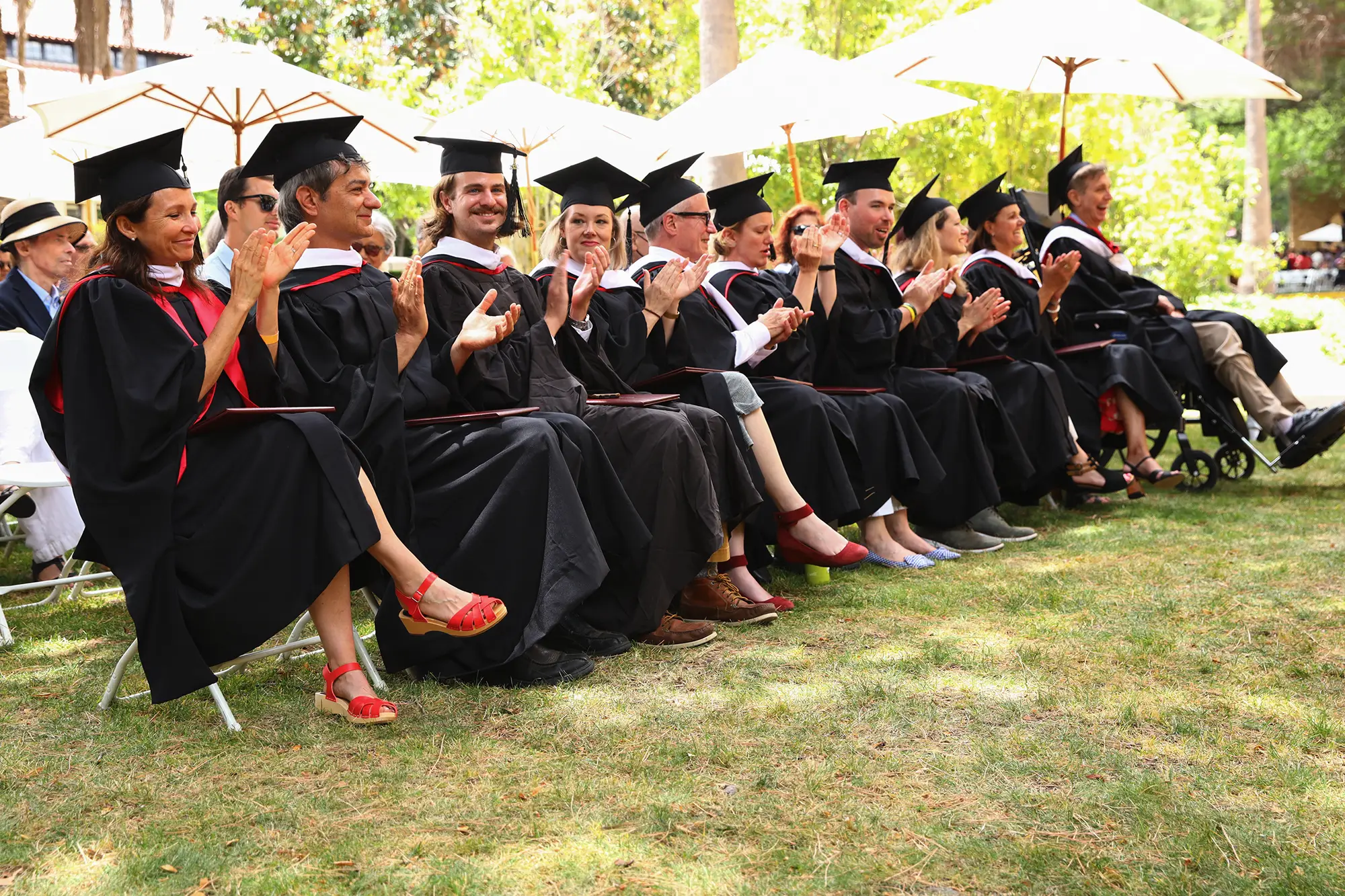
Continuing Studies is pleased to offer a variety of free public programs and special events every year, including lectures, readings, and webinars covering a broad range of subject areas from current affairs to the creative arts.

Learn more about upcoming events

Master of Liberal Arts
Stanford Master of Liberal Arts
Start your next chapter with a part-time, evening graduate degree in the liberal arts.

Stanford’s Master of Liberal Arts Program (MLA) offers an extraordinary opportunity to pursue an interdisciplinary course of study in the liberal arts and earn your master’s degree at one of the world’s great centers of learning. Designed with busy adults in mind, this part-time graduate degree program holds classes in the evenings and offers a flexible academic schedule.

S

tanford’s Master of Liberal Arts Program (MLA) offers an extraordinary opportunity to pursue an interdisciplinary course of study in the liberal arts and earn your master’s degree at one of the world’s great centers of learning. Designed with busy adults in mind, this part-time graduate degree program holds classes in the evenings and offers a flexible academic schedule.

In the MLA program, students form a close-knit cohort that takes courses taught by Stanford faculty. Areas of study include history of science, philosophy, literature, environmental studies, political science, history, and more. Students will hone their ability to write persuasively and creatively, develop compelling arguments, conduct original research, and integrate thinking from multiple disciplines. For many students, these are ends in themselves. For others, these skills serve them well in their professional lives.

MLA applications are accepted from September through January, with classes beginning in September of the following academic year. For more information on the program and admissions details, please visit: mla.stanford.edu.

Taking Stanford Continuing Studies courses can be excellent preparation for applying to the MLA program. Each quarter, the MLA program recommends courses that are similar in subject and format to seminars you would find in MLA study.

Stanford flag with leaves in front
© Robert Siegel
Whether you prefer the flexibility of online classes or the vibrant atmosphere of in-person sessions, we look forward to seeing you this Summer Quarter!

Registration opens May 18, and the quarter begins the week of June 22.