
Stanford Continuing Studies Fall Courses 2025

Stanford Continuing Studies Logo
Fall 2025
Welcome Letter
Jennifer Deitz headshot

Welcome Letter

Dear Friends,
A

s summer winds down, we’re looking forward, as always, to the start of a new school year and to discovering what lies ahead. The challenges many universities have faced in recent months have made us more grateful than ever for the opportunity Continuing Studies has to showcase the rich scholarship, research, and thinking at the heart of Stanford.

Lately, our team has been reflecting on the art of the lecture, an element of our program that feels increasingly rare and deeply valuable. In an era of shortened attention spans and heightened emphasis on the utilitarian side of education—centered on measurable outcomes and career-driven skills—we’ve found inspiration in offering a different path: learning for its own sake.

We’ve worked to elevate and reinvigorate the tradition of the lecture in the courses we offer, not because it optimizes us for anything concrete, but because of what it opens up. A well-crafted, well-delivered lecture can raise questions, spark curiosity, inspire reflection, move us, or simply help us sit with our thoughts and perhaps feel a little more connected to the people around us. There’s something profound in the act of listening quietly, for an hour or even two, as some of the world’s most thoughtful scholars share insights shaped by years—sometimes decades—of deep study.

In that spirit, I want to take a moment to remember Christopher Ireland. It is, in large part, because of her extraordinary gifts as a teacher, mentor, leader, and role model that I was fortunate enough to step into this role at Continuing Studies. My first introduction to the program was through a design implementation course taught by Christopher. From the start, I was struck by her rare combination of confidence, intelligence, humor, warmth, curiosity, and her no-nonsense ability to motivate, lead, and get things done.

Christopher was the founding partner and former CEO of Cheskin, a design innovation consultancy that supported companies like Microsoft, Google, Apple, and Ford. She taught 33 courses with Continuing Studies over the past decade, reaching more than a thousand students. Her classes applied design principles to leadership, change management, research, and envisioning the future.

Christopher was incredibly generous with her time, offering invaluable guidance as we restructured Continuing Studies in response to the pandemic and shifted toward more online instruction. A master of change management, she knew how to move swiftly but thoughtfully, always centering people and core values while maintaining the urgency to drive meaningful and sustainable change. Over the years, Christopher became a trusted advisor and mentor. Her support and friendship were among the great joys of my life. She passed away unexpectedly in spring, but she will be remembered with deep love by all of us at Continuing Studies who were fortunate enough to have worked with her. We are forever grateful for her lasting impact on our program and our lives.

I’d also like to highlight another dear friend and longtime instructor, Samina Ali, who recently published a powerful and deeply personal memoir, Pieces You’ll Never Get Back. In it, Samina writes about nearly dying while giving birth to her son and the long, difficult process of recovering from a coma and severe memory loss.

Samina teaches in our Novel Writing Certificate program and for many years now has also led her extraordinarily popular course, Write a Novel in 30 Days: No Critics, No Fear. She is offering it again this fall, followed by a new memoir-focused version launching in winter. Congratulations, Samina!

Once again, we have an exceptional lineup of courses this fall. Please join us in a lecture hall on campus or in conversation over Zoom. Below are just a few highlights from this quarter’s offerings, which feature some of our most compelling instructors, scholars, and thought leaders. And please don’t miss our exciting new partnership with the Senior Academy at Stanford Medicine. Together, we will be bringing you the first-ever Stanford Medicine Distinguished Faculty Lecture Series.

See you all in class!

Warmly,

Jennifer Deitz signature

Jennifer Deitz
Director & Associate Dean
Table of Contents

Table of Contents

he grand interior of a domed building, possibly a museum or library, featuring four large, fluted columns with golden capitals. A black ornate railing encircles a lower level, and a star-shaped chandelier hangs from the center of the dome above. Sunlight streams through a skylight at the very top of the dome.
Liberal Arts & Sciences

Immerse yourself in the liberal arts to awaken your creativity, enhance your critical thinking abilities, and gain a deeper understanding of our complex world.
A vibrant, impressionistic painting of an autumn landscape. A stone arch bridge with hints of red and white crosses a calm river with reflections of orange and blue. The banks of the river are filled with trees and bushes painted in shades of bright yellow and orange, suggesting fall foliage.
Art Studio

Reignite your capacity for creativity in an art studio course.
An overhead view of various spices in small bowls and scattered on a wooden surface. Prominent spices include red chili peppers, star anise, cloves, black peppercorns, green cardamom pods, cinnamon sticks, whole nutmeg, and various colored powders like red paprika and yellow turmeric.
Food & Drink

Explore a curated selection of Stanford’s top courses across various disciplines, designed to provide an exceptional learning experience
Seven dark, smooth stepping stones in a line receding into the distance across calm, dark blue water. Ripples emanate from the closest stone on the left. In the background, a bright, hazy sunset casts an orange glow across the horizon, reflected in the water.
Wellness & Health

Prioritize your health and wellness with courses designed to help you build healthy habits and support your mental and emotional well-being.
A vintage beige typewriter with a piece of white paper inserted into its roller, sitting on a dark wooden table. The background is a solid, light teal color, creating a simple and clean aesthetic. The image is taken from a slightly low angle, emphasizing the typewriter.
Creative Writing

Whether you’re just beginning to write or putting the finishing touches on your first novel, our writing courses offer expert instruction from accomplished authors, individual attention, and supportive feedback.
Abstract image depicting communication: five overlapping outlines of speech bubbles in red, orange, green, light blue, and dark blue on a dark gray background. The shapes vary from round to square.
Communication

Hone your communication skills and learn how to convey a clear, compelling, and consistent message.
A close-up, angled view of a wall covered in numerous colorful sticky notes. The notes are in various shades of pink, orange, yellow, green, and blue, creating a vibrant, textured pattern, suggesting brainstorming or project organization.
Design

Our business courses will equip you with the knowledge and skills you need to succeed in building your career, launching a startup, or growing a business.
An overhead view of a large, light-colored surface, possibly a plaza, with many people scattered across it. Thin black lines connect various individuals, forming a complex network pattern, suggesting connections or interactions in a business context.
Business

Indulge your taste buds in a culinary journey through our Food & Drink courses.
An abstract digital image with a central glowing rectangle that recedes into the distance, surrounded by a dark blue background filled with numerous small, brightly colored light particles. The particles appear to be moving towards the viewer, creating a sense of depth and data flow.
Technology

Embark on a journey through artificial intelligence, master a new coding language, or dive into the world of data science.
Campus building in background with bushes in the foreground
Writing Certificates

Continuing Studies is pleased to offer a variety of free public programs and special events every year.
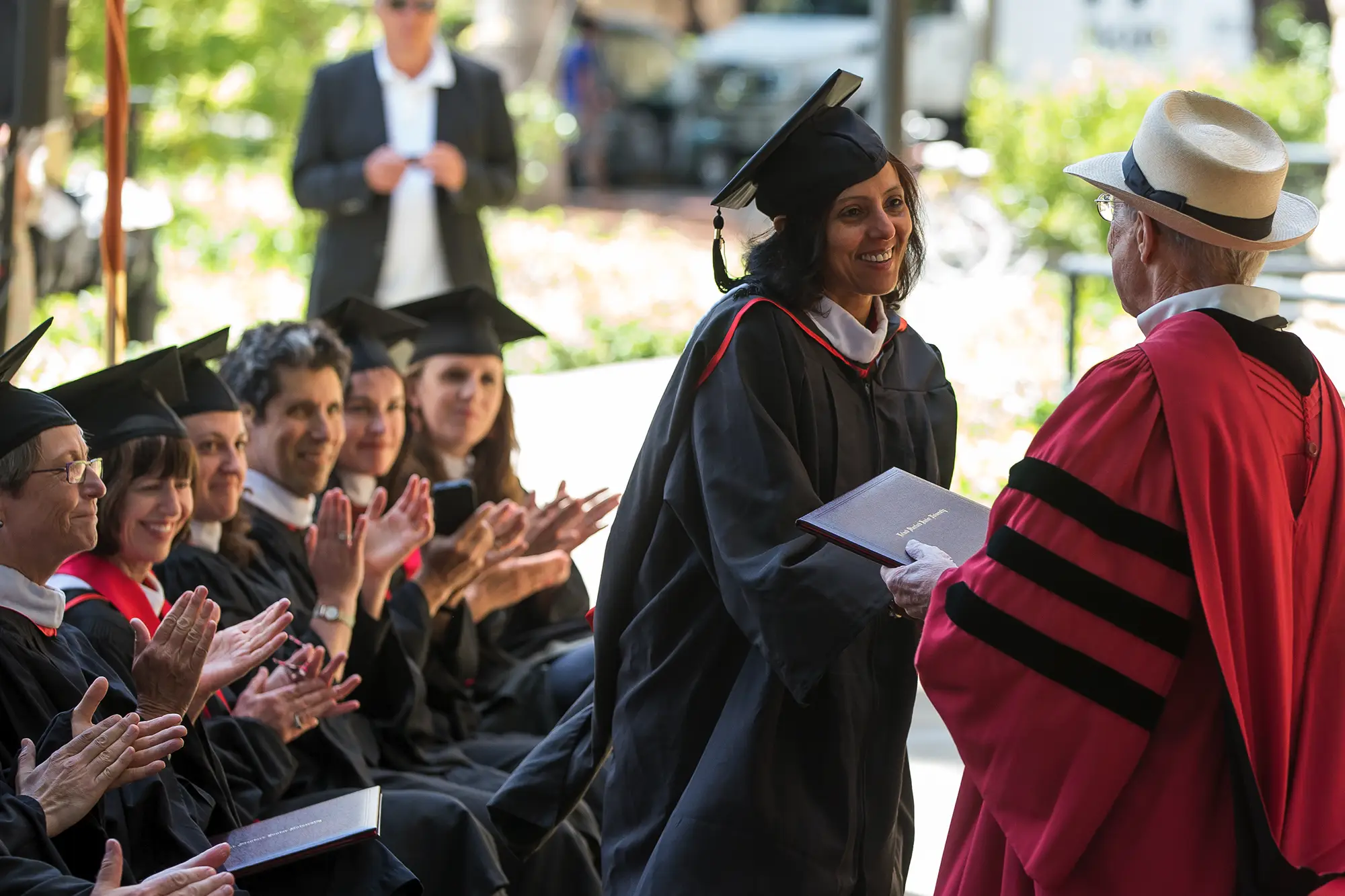
Stanford MLA Graduate shaking hands
Master of Liberal Arts

Start your next chapter with a part-time, evening graduate degree in the liberal arts.
Fall Spotlight

Fall Spotlight

Featured Courses

Featured Courses

Liberal Arts & Sciences

Liberal Arts & Sciences

Immerse yourself in the liberal arts to awaken your creativity, enhance your critical thinking abilities, and gain a deeper understanding of our complex world. From fine arts to film, language to literature, philosophy to history, explore a rich array of courses in the liberal arts and sciences.

Archaeology


Patrick Hunt
Former Director, Stanford Alpine Archaeology Project; Research Associate, Archeoethnobotany, Institute of EthnoMedicine

Journey to the birthplace of civilization in this exploration of ancient Mesopotamia, the earliest center of civilization, emerging about 7,000 years ago. Through archaeology, history, and literature such as the Epic of Gilgamesh and the Code of Hammurabi, we’ll trace the rise of early cultures from the Ubaid and Uruk periods to the Achaemenid Empire.

Architecture


Sapna Marfatia
Campus Preservation Architect and Director, University Architecture/Campus Planning & Design, Stanford

Explore the opulent Filoli estate, a symbol of the Gilded Age, and its Beaux-Arts mansion through this immersive course on architecture as visual art. Led by Stanford’s architecture director, gain insight into how architectural ingenuity seamlessly blends form and function, giving rise to a culturally significant landmark.

Art History


Diane Zuliani
Art History Instructor, Chabot College

Visual art speaks its own language, built on color, line, space, balance, and rhythm. This course introduces the core elements and design principles artists use to shape meaning and guide perception. By learning to recognize and interpret these visual tools, students will develop a more insightful and rewarding connection to art.

Patrick Hunt
Former Director, Stanford Alpine Archaeology Project; Research Associate, Archeoethnobotany, Institute of EthnoMedicine

Examine the dramatic shift from Renaissance ideals to the bold innovations of the baroque era through the works of Caravaggio, Rembrandt, and Vermeer. We’ll explore how these artists transformed religious, mythological, and everyday subjects into groundbreaking visual statements. Students will gain a deeper understanding of the enduring influence of these masters on the evolution of Western art.


David G. Stork
Scientist and Author
This course explores the economics of fine art through the lenses of market failure, scarcity, and uncertainty, offering powerful insights into how we assign value to cultural goods and why the art world remains one of the most intriguing markets in the global economy. From auction houses to private sales, we’ll examine how unique artworks challenge core economic principles and we’ll consider the influence of museums, collectors, and artist foundations in shaping both taste and price.

Classics


Marsh McCall
Professor of Classics, Emeritus, and Founder and Dean of Continuing Studies, Emeritus, Stanford

Closely read the Sophoclean tragedies Antigone, Oedipus Rex, and Philoctetes through the lens of fate, justice, power, and human conflict. Explore their poetic force and dramatic structure while considering how these plays resonated with ancient Athenian audiences in the theater of Dionysus.

Christopher Krebs
Gesue and Helen Spogli Professor of Italian Studies, Professor of Classics and, by courtesy, of German Studies and of Comparative Literature, Stanford

Step into the world of Cicero, Rome’s master orator, and discover how the art of persuasion has shaped public discourse for over two millennia. We’ll study powerful speeches from ancient Greece and Rome, explore a foundational rhetorical treatise, and apply classical principles to modern oratory, from Shakespeare’s Antony to Michelle Obama.

Cultural Studies


Miles Osgood
Lecturer, Structured Liberal Education (SLE), Stanford

Explore how Homer’s Odyssey has shaped and been reshaped by some of the most influential literary works of the 20th century. From Joyce and Walcott to Atwood and Glück, we’ll examine how modern writers draw on the epic’s themes of exile, identity, and return to craft new narratives and critique old ones.

Altair Brandon-Salmon
COLLEGE Lecturer, Civic, Liberal, and Global Education, Stanford

Examine how the devastation of the Blitz, Germany’s relentless 1940 bombing campaign, became a catalyst for artistic and architectural transformation in postwar London. This course traces how the legacies of World War II reshaped British art, design, and cultural memory, turning sites of destruction into powerful sources of creative expression. From bombed churches to reimagined neighborhoods, we’ll follow artists like Cecil Beaton and Rachel Whiteread as they transformed rubble into some of Britain’s most compelling postwar art.

Arthur Chait
Entrepreneur and Former Adjunct Professor, Notre Dame de Namur and Menlo College

Examine six game-changing innovations: the printing press, steam engine, light bulb, antibiotics, integrated circuits, and the internet. Each invention marks a pivotal moment in human history, redefining how we live, work, think, and connect. We’ll uncover the stories behind their creation, the revolutions they sparked, and the ripple effects—both intended and unexpected—that still shape our world today.


Sana Javeri Kadri
Founder and CEO, Diaspora

For over 5,000 years, spices have shaped empires, trade routes, and culinary traditions—yet their origins and impact often go unnoticed. This course traces the global history of the spice trade, from ancient caravans to colonial conquests, while exploring the modern challenges of spice production. Through tastings, cooking techniques, and cultural context, students will discover how everyday spices carry deep stories of power, labor, and flavor.


Edwin Bernbaum
Co-Chair, International Union for Conservation of Nature Specialist Group on Cultural and Spiritual Values of Protected Areas; Senior Fellow, Instituto de Montaña

From Mount Sinai in the Bible to Mount Everest, mountains have long captivated the human imagination and symbolized our highest aspirations. This course explores the role of mountains across mythology, religion, literature, history, and art. We’ll also consider the spiritual dimensions of mountaineering and examine urgent issues of climate change and environmental conservation.

Current Events

James Steyer
Adjunct Professor, Stanford Graduate School of Education, and Founder and CEO, Common Sense Media

This course explores the shifting state of democracy, with a focus on the role of technology in shaping political and social life. Key topics include democratic norms and institutions, AI’s societal impact, and the global youth mental health crisis. Guest speakers from politics, business and tech, academia, law, and media will share insights and life lessons, including Thomas Friedman, Michael Lewis, Kara Swisher, Dr. Vivek Murthy, Margrethe Vestager, David Kennedy, Fareed Zakaria, Margaret Spellings, and Stanford President Jonathan Levin.

Dance Studies


Anton Pankevitch
Lecturer, Department of Theater & Performance Studies, Stanford

This course offers an accessible introduction to ballet, one of the most elegant and time-honored forms of dance. Designed for beginners, it focuses on the foundational elements of ballet technique, including posture, placement, and basic steps, while encouraging a deeper connection to movement, rhythm, and music.

Economics


David G. Stork
Scientist and Author

This course explores the economics of fine art through the lenses of market failure, scarcity, and uncertainty, offering powerful insights into how we assign value to cultural goods and why the art world remains one of the most intriguing markets in the global economy. From auction houses to private sales, we’ll examine how unique artworks challenge core economic principles and we’ll consider the influence of museums, collectors, and artist foundations in shaping both taste and price.

Film Studies


Elliot Lavine
Film Historian and Filmmaker

Since the dawn of cinema, filmmakers have grappled with how to uphold democratic ideals in times of crisis. Gain insight into how directors responded to the turmoil of the 1930s and 1940s, including economic collapse, World War II, and the rise of totalitarianism, through bold, politically charged works of cinematic resistance. From Casablanca and The Great Dictator to Rome, Open City, we’ll see how film became a powerful tool for confronting oppression and championing freedom.

Mick LaSalle
Film Critic Emeritus, San Francisco Chronicle

What makes a film a classic, and why do some movies endure while others fade? Explore the qualities that give great films lasting power, from timeless themes to unforgettable performances and directorial vision. Through a wide-ranging selection of films, including Blindspotting, Tommy, Milk, A Hard Day’s Night, and Django Unchained, students will learn to identify cinematic works that stand the test of time and recognize the classics of tomorrow.

History


Gary Devore
Archaeologist

Dive into the lives and legacies of eight Roman emperors, from the visionary Augustus to the volatile Nero and the philosopher-king Marcus Aurelius. Through ancient texts and modern scholarship, we’ll examine how these rulers gained, wielded, and sometimes lost power, and consider how their reigns illuminate timeless questions of leadership, legitimacy, and legacy.

Margo Horn
Former Lecturer, Department of History, Stanford

Trace the American women’s suffrage movement from its 19th-century reform roots through the ratification of the 19th Amendment and beyond. We’ll examine how race and gender shaped the movement, explore California’s role in the struggle, and consider how women’s voting patterns have influenced American democracy since 1920.

Languages

Heather Howard
Lecturer in French, Stanford

Designed for students with little to no knowledge of French, this course focuses on acquiring basic communication skills using a creative, all-in-French, conversational approach in a fun and relaxed class atmosphere.

María Cristina Urruela
Former Lecturer in Spanish, Stanford

It’s time to speak Spanish with confidence! This immersive course is your gateway to oral proficiency and comprehension, offering a vibrant exploration of the Spanish-speaking world and its rich cultures.

María Cristina Urruela
Former Lecturer in Spanish, Stanford

From love and friendship to art and food, this course offers lively, accessible conversations for students with a basic background in Spanish. Strengthen your speaking skills through short films, news articles, and stories while exploring the rich diversity of Spanish-speaking cultures.

Giovanni Tempesta
Advanced Lecturer in Italian, Stanford

If you already have a basic ability to converse in Italian, this course will help take your skills to the next level. Using a “building block” approach, we’ll focus on expanding vocabulary and grammar to strengthen both written and spoken fluency. Authentic Italian media, including videos, newspapers, and magazines, will deepen your language skills and cultural understanding.

Literature


Rebecca Richardson
Advanced Lecturer, Program in Writing and Rhetoric, Stanford

Celebrate the 250th anniversary of Jane Austen’s birth by revisiting three of her late works—Emma, Persuasion, and the unfinished Sanditon—to explore the evolution of her style, themes, and satirical edge. From Emma’s comic misdirection to Persuasion’s quiet poignancy and Sanditon’s sharp social critique, we’ll examine how Austen’s mature voice continues to resonate in literature and adaptation today.

Michael Krasny
Professor of English, Emeritus, SF State

First published in 1925, The Great Gatsby has become a touchstone of American literature, captivating generations with its elegance, irony, and insight. We’ll explore the novel’s meaning, language, and cultural impact, both past and present, while engaging with a range of critical perspectives, including fervent admirers and thoughtful dissenters.

Chloe Summers Edmondson
Lecturer, Department of French and Italian, Stanford

No country has shaped our ideas of romance quite like France, and no literature has captured its complexities more vividly than the French novel. In this course, we’ll explore tales of longing, betrayal, obsession, and disillusionment, from La Princesse de Clèves to Madame Bovary and The Lover. We’ll examine how these works have defined love’s pleasures and costs—and how their heroines continue to shape our cultural imagination.

Medicine


Michael Snyder
Stanford W. Ascherman Professor of Genetics, Stanford Medicine
Lucy Tompkins
Professor of Medicine (Infectious Diseases) and of Microbiology and Immunology, Emerita, Stanford Medicine
Deborah Kado
Professor of Medicine (Geriatrics and Gerontology), Stanford Medicine; Co-Director, Stanford Center on Longevity
Mark S. Blumenkranz
H.J. Smead Professor of Ophthalmology, Emeritus, Stanford Medicine
Daniel Bernstein
Alfred Woodley Salter and Mabel G. Salter Endowed Professor of Pediatrics (Cardiology); Associate Dean for Curriculum and Scholarship, Stanford Medicine
Join us this fall for our Stanford Medicine Distinguished Faculty Lecture Series, the result of a new collaboration between the Senior Academy at Stanford Medicine and Stanford Continuing Studies. Discussions include “Rethinking Health: Big Data, Wearables, and the Future of Preventive Medicine,” “Impact of the Black Death on History,” “Imagining a Century-Long Life: Science, Strategy, and the Secrets of Healthy Aging,” “Living Longer, Seeing Better: Innovations in Eye Care for an Aging Population,” and “Will Stem Cells Cure Heart Disease?”


Bruce Fogel
Adjunct Professor, Division of Clinical Anatomy, Department of Surgery, Stanford Medicine
Subhro K. Sen
Clinical Associate Professor, Division of Plastic and Reconstructive Surgery, Stanford Medicine
Embark on an immersive exploration of anatomy using cadaver specimens and advanced digital technologies, including 3D visualization tools and haptic simulations. Students will learn to identify anatomical structures in the upper limb as well as common clinical conditions affecting these structures. Combining traditional and cutting-edge methods, the course provides a unique insight into how anatomy is taught and applied at Stanford.

Anthony Boutelle
COLLEGE Lecturer, Civic, Liberal, and Global Education, Stanford
This course explores the molecular foundations of human health by examining four major categories of disease: inherited, infectious, cancer, and neurodegenerative. From CRISPR gene editing to cutting-edge immunotherapies, students will discover how breakthroughs in biology are reshaping the future of medicine.

Seema Yasmin
Clinical Assistant Professor, Department of Medicine, Stanford
False information spreads quickly—and lingers—eroding public trust, disrupting elections, threatening public health, and deepening social divides. In this course led by a Stanford physician and science journalist, you’ll explore a practical, research-based strategy known as prebunking: a proactive approach to resisting misinformation. Learn how to detect deception, build mental resilience, and engage constructively with those influenced by falsehoods.


Clyde Wilson
Research Associate, Biochemistry, UC San Francisco
Maximize the potential of your exercise regimen with the powerful combination of nutrition and fitness. Join us in this comprehensive course where we explore the impact of nutrition on exercise benefits, including weight loss, immune strength, and overall fitness, plus create your own sports nutrition program.


Marwa Azab
Adjunct Professor of Psychology, CSU Long Beach

What if we could manage our emotions more effectively? Gain a foundational understanding of the neuroscience of emotions and regulation, exploring how emotions are constructed in the brain and how they influence thoughts, decisions, and relationships. This awareness can have far-reaching implications for fostering mental health, positive relationships, and our general quality of life.

Music Studies


David Gans
Producer and Host, The Grateful Dead Hour

The Grateful Dead didn’t just improvise their music—they improvised a movement. Whether you’re a lifelong Deadhead or just Dead-curious, this course provides unique insights on how the Dead built an enduring, improvisational blueprint for art, business, and community. Hosted by longtime Dead chronicler David Gans, you’ll hear from acclaimed authors, each with a distinct lens on the influence of the band.

Stephen Schultz
Professor of Music History, Carnegie Mellon

Few composers poured more of themselves into their music than Gustav Mahler. Across his 11 symphonic works, he grappled with life’s biggest questions, including love and loss, existence and mortality, and the search for meaning in a fractured world. This course traces the arc of Mahler’s symphonic journey, uncovering the personal and artistic struggles that shaped his legacy.

Timothy Hampton
Aldo Scaglione and Marie M. Burns Distinguished Professor of Comparative Literature and French, UC Berkeley

Explore how Bob Dylan reshaped the boundary between poetry and song, placing his work within a broader literary tradition while reconnecting poetry to its roots in music. Through close readings of Dylan’s songs alongside poets who influenced him, such as the Beats, English Romantics, and even Shakespeare, we’ll examine his role as a “troubadour” and his impact on modern literary and musical traditions.

Music Studio


Lisa Sanchez
Instructor, Gryphon Stringed Instruments

Have you always wanted to play the guitar but were afraid it would be too hard to learn? This course will help make guitar playing easy and fun. At a comfortable pace, students will learn basic chords and right-hand accompaniment patterns and apply these techniques to easy folk and popular songs—including songs written by The Beatles, Bob Dylan, and more.

Nature & Conservation Studies


Edwin Bernbaum
Co-Chair, International Union for Conservation of Nature Specialist Group on Cultural and Spiritual Values of Protected Areas; Senior Fellow, Instituto de Montaña

From Mount Sinai in the Bible to Mount Everest, mountains have long captivated the human imagination and symbolized our highest aspirations. This course explores the role of mountains across mythology, religion, literature, history, and art. We’ll also consider the spiritual dimensions of mountaineering and examine urgent issues of climate change and environmental conservation.

Philosophy


Frederick M. Dolan
Professor of Rhetoric, Emeritus, UC Berkeley

This course examines four revolutionary thinkers: Marx, Nietzsche, Heidegger, and Arendt, each of whom called for a radical rethinking of the Western philosophical tradition. Challenging inherited assumptions about history, morality, politics, and existence, they linked key crises of modernity—alienation, nihilism, technology, and political decline—to deep flaws in that tradition. We’ll explore their critiques and consider what their ideas reveal about the modern world.

Psychology


Marwa Azab
Adjunct Professor of Psychology, CSU Long Beach

What if we could manage our emotions more effectively? Gain a foundational understanding of the neuroscience of emotions and regulation, exploring how emotions are constructed in the brain and how they influence thoughts, decisions, and relationships. This awareness can have far-reaching implications for fostering mental health, positive relationships, and our general quality of life.

Seema Yasmin
Clinical Assistant Professor, Department of Medicine, Stanford
False information spreads quickly—and lingers—eroding public trust, disrupting elections, threatening public health, and deepening social divides. In this course led by a Stanford physician and science journalist, you’ll explore a practical, research-based strategy known as prebunking: a proactive approach to resisting misinformation. Learn how to detect deception, build mental resilience, and engage constructively with those influenced by falsehoods.

Science


Michael McWilliams
Professor of Earth and Planetary Sciences, Emeritus, Stanford

This course offers a sweeping exploration of the universe’s story, from the Big Bang to the emergence of life on Earth. We’ll explore how fundamental particles formed, how they gave rise to the elements of the periodic table and thousands of isotopes, and how these components fueled the formation of galaxies, stars, and planetary systems, including our own.

Bruce Fogel
Adjunct Professor, Division of Clinical Anatomy, Department of Surgery, Stanford Medicine
Subhro K. Sen
Clinical Associate Professor, Division of Plastic and Reconstructive Surgery, Stanford Medicine
Embark on an immersive exploration of anatomy using cadaver specimens and advanced digital technologies, including 3D visualization tools and haptic simulations. Students will learn to identify anatomical structures in the upper limb as well as common clinical conditions affecting these structures. Combining traditional and cutting-edge methods, the course provides a unique insight into how anatomy is taught and applied at Stanford.

Anthony Boutelle
COLLEGE Lecturer, Civic, Liberal, and Global Education, Stanford
This course explores the molecular foundations of human health by examining four major categories of disease: inherited, infectious, cancer, and neurodegenerative. From CRISPR gene editing to cutting-edge immunotherapies, students will discover how breakthroughs in biology are reshaping the future of medicine.

Clyde Wilson
Research Associate, Biochemistry, UC San Francisco
Maximize the potential of your exercise regimen with the powerful combination of nutrition and fitness. Join us in this comprehensive course where we explore the impact of nutrition on exercise benefits, including weight loss, immune strength, and overall fitness, plus create your own sports nutrition program.

Sports


Andy Dolich
President, Dolich Consulting

As Super Bowl LX returns to Silicon Valley in 2026, join us for a behind-the-scenes look at the planning, promotion, and production of America’s biggest sporting event. Through conversations with players, executives, and industry insiders, we’ll explore how the Super Bowl blends sports, business, media, and technology on a global stage. From team analytics to ad strategy, you’ll gain insight into the game’s evolving role in American culture and commerce.

Stanford Distinguished Faculty Lecture Series


Michael Snyder
Stanford W. Ascherman Professor of Genetics, Stanford Medicine
Lucy Tompkins
Professor of Medicine (Infectious Diseases) and of Microbiology and Immunology, Emerita, Stanford Medicine
Deborah Kado
Professor of Medicine (Geriatrics and Gerontology), Stanford Medicine; Co-Director, Stanford Center on Longevity
Mark S. Blumenkranz
H.J. Smead Professor of Ophthalmology, Emeritus, Stanford Medicine
Daniel Bernstein
Alfred Woodley Salter and Mabel G. Salter Endowed Professor of Pediatrics (Cardiology); Associate Dean for Curriculum and Scholarship, Stanford Medicine
Join us this fall for our Stanford Medicine Distinguished Faculty Lecture Series, the result of a new collaboration between the Senior Academy at Stanford Medicine and Stanford Continuing Studies. Discussions include “Rethinking Health: Big Data, Wearables, and the Future of Preventive Medicine,” “Impact of the Black Death on History,” “Imagining a Century-Long Life: Science, Strategy, and the Secrets of Healthy Aging,” “Living Longer, Seeing Better: Innovations in Eye Care for an Aging Population,” and “Will Stem Cells Cure Heart Disease?”

Art Studio

Art Studio

Reignite your capacity for creativity in an art studio course. From drawing and photography to creating your own podcast or video, our courses will help you develop your skills and find inspiration that will truly elevate your creative expression.

Audio, Video & Film

Ryan Campos
Audio Specialist and Sound Artist

Learn how to create your own successful podcast! This course will cover topics such as podcast structure, content formats, equipment options for different budgets, hosting platforms, and maximizing exposure and profitability. Gain hands-on experience in recording and editing techniques and come away from the course with a trailer, a five-minute pilot episode, and an outline for a complete podcast series.

Cielo de la Paz
Photographer and Filmmaker

In today’s world of modern videography, you no longer need expensive equipment to bring your stories to life. With just your iPhone and a creative mindset, you can captivate and inspire your audience with visually stunning videos. Shoot, edit, and produce your own videos on an iPhone and learn about the applications, accessories, and techniques needed to create stunningly professional-looking film footage, as well as composition and storytelling basics.

Drawing, Painting & Other Media

Michael Azgour
Artist

Spend more time creating and less time analyzing in this five-week intensive designed for students who want to incorporate a creative art practice into their daily lives. Students will explore mixed media in unconventional ways, focusing on the creative process rather than mastering a particular medium. Daily prompts will guide students through various artistic exercises using materials like graphite, ink, acrylic paint, photography, and collage.

Katie Hawkinson
Artist

Learning to paint involves two primary endeavors: mastering the medium and selecting suitable subjects to paint. Whether the approach is realism or abstraction, these two aspects are best learned in tandem. In this course, we will paint from still lives, interior spaces, and landscapes, learning how to create strong and compelling compositions, mix colors, work with light and shadow, and add texture.

Erin E. Hunter
Fine Artist and Science Illustrator

Explore the art and science of botanical drawing with guidance from a professional science illustrator. This course combines the study of botanical anatomy with hands-on techniques, including sketching, watercolor, and colored pencil. Through flower dissection and observation, you’ll create a detailed botanical study while learning to capture the beauty of both cultivated and wild blooms.

John Peck
Instructor, Triton Museum of Art

Whether you’re a beginner or an experienced artist, this course will equip you with the techniques to create realistic portraits and serve as a valuable foundation for future painting endeavors. Using a small mirror, we will distinguish between our imagination and what our eyes actually see. This approach will lead to an entirely objective way of seeing and drawing the realistic portrait.

Lauren Toomer
Lecturer, Department of Art & Art History and Division of Clinical Anatomy, Stanford

Inspired by the Art and Anatomy courses for Stanford medical students, this course offers a unique opportunity to explore the human foot through an artist’s lens. Develop both your artistic skills and anatomical understanding through hands-on drawing sessions and guided instruction, and gain insight into foundational drawing techniques and the structure of the foot.

Ann Balaam Miller
Artist

This course offers an in-depth exploration of the history and application of Norse runes, from Elder Futhark to the Ogham alphabet, highlighting their influence on modern design elements like the Bluetooth logo. Students will engage in practical exercises, such as crafting runes into various designs and mastering calligraphy techniques, to create personalized artwork that integrates these ancient symbols with contemporary artistic methods.

Brett Amory
Lecturer in Art Practice, Stanford

This course provides an introduction to oil painting techniques, materials, and vocabulary. It emphasizes the importance of value in creating the illusion of three-dimensional forms on a flat surface, as well as exploring light, shadow, color harmony, warm and cool colors, composition, cropping, overlapping, and placement in the picture plane. Learn how to start and finish a painting from life and from a photograph.

Andrew Catanese
Lecturer, Stanford Department of Art & Art History

Discover how to turn a sketchbook into a daily creative practice—a space for drawing, reflection, and artistic exploration. By learning to slow down and experiment as you fill your pages with drawings, watercolors, photographs, and words, you’ll build a habit that fuels both imagination and mindfulness. Whether you’re an artist or curious beginner, this course will show you how to make sketchbooking a regular and rewarding part of your day.

Joshua Moreno
Lecturer, Department of Art & Art History, Stanford

Embark on a creative journey through the timeless art of watercolor painting. This hands-on course introduces fundamental techniques, tools, and principles of watercolor painting. Achieve different effects and textures by experimenting with various watercolor techniques, including wet-on-wet, dry brush, and glazing. Learn to mix and blend pigments to create vibrant and harmonious compositions.

Photography

Joel Simon
Documentary and Fine Art Photographer
John Lambert
Photographer
Access to imagery has never been easier than in our digital age. Our phones and cameras are capable of producing hundreds, thousands, maybe millions of photos, but to what end and to what beginning? This course is designed for photography enthusiasts who want to build a creative practice of making photos every day.

Yoni Mayeri
Photographer, Artist, and Educator
Learn to turn your everyday iPhone photos into stunning pictures. Explore the built-in Photos app for editing and enhancing images, optimize the features of the native camera, and discover third-party editing applications and accessories to enhance your images.

Joel Simon
Documentary and Fine Art Photographer
Benjamin Arthur
Animation Director and Illustrator
AI art! What is this magical new tool, and can it enrich our creative process? For the first time ever, computers are able to generate images based on simple word descriptions. In this introductory course, we will explore the potential of AI as a creative instrument and help you develop the skills to produce your own AI-generated art.

Food & Drink

Food & Drink

Indulge your taste buds in a culinary journey through our Food & Drink courses. From wine and coffee to chocolate and cheese, our courses are designed to broaden your knowledge and feed your curiosity.

Food & Drink Courses


Sana Javeri Kadri
Founder and CEO, Diaspora

For over 5,000 years, spices have shaped empires, trade routes, and culinary traditions—yet their origins and impact often go unnoticed. This course traces the global history of the spice trade, from ancient caravans to colonial conquests, while exploring the modern challenges of spice production. Through tastings, cooking techniques, and cultural context, students will discover how everyday spices carry deep stories of power, labor, and flavor.

Wellness & Health

Wellness & Health

Prioritize your health and wellness with courses designed to help you build healthy habits and support your mental and emotional well-being. Explore courses taught by psychologists, physicians, health advisors, and other experts in their field.

Emotional & Mental Health

Glenn Brassington
Professor of Psychology, Sonoma State

Learn to apply the mental-training techniques used by top athletes, performers, and business leaders to enhance your performance in all areas of life. This practical course will help you develop the optimal mental state by improving concentration, overcoming fatigue, boosting mood, building confidence, and mastering the challenges of work, sport, and everyday life.

Marwa Azab
Adjunct Professor of Psychology, CSU Long Beach

What if we could manage our emotions more effectively? Gain a foundational understanding of the neuroscience of emotions and regulation, exploring how emotions are constructed in the brain and how they influence thoughts, decisions, and relationships. This awareness can have far-reaching implications for fostering mental health, positive relationships, and our general quality of life.

Life Design


Kristi Rible
Founder, The Huuman Group

As more and more mothers aspire to a life filled with career success, family, and couple equity at home, success in all areas can feel elusive. This course equips leaders and caregivers with the knowledge, tactics, and strategies to create positive change for mothers in the workplace, at home, and throughout daily life.

Mark Nicolson
Founder, Nicolson Group

How often do you have the opportunity to pause, reflect, and realign with what brings joy, purpose, and meaning to your life? Blending psychology, movement, and ancient wisdom, this course invites students to engage in guided exercises and deep conversations to navigate life transitions, clarify personal values, and uncover behaviors that support or hinder fulfillment.

Sarah Deane
CEO and Founder, MEvolution

The freedom to be yourself begins with knowing what truly matters to you. This uplifting, practical course helps you identify your core values and learn how to live by them, both at work and in your personal life. Through science-based tools and reflective exercises, you’ll gain clarity, confidence, and a personalized “compass” to guide you through life’s challenges with purpose and alignment.

Raj Bhargava
Educator and Entrepreneur

Drawing on the latest behavioral science research, we’ll delve into the meaning of life, mindsets, vulnerability, and habits. Through design thinking, collaborative exercises, and the integration of artificial intelligence, you’ll develop a clear and measurable plan, equipped with the tools to overcome barriers and embark on an exciting new chapter of your life.

Nutrition


Clyde Wilson
Research Associate, Biochemistry, UC San Francisco

Maximize the potential of your exercise regimen with the powerful combination of nutrition and fitness. Join us in this comprehensive course where we explore the impact of nutrition on exercise benefits, including weight loss, immune strength, and overall fitness, plus create your own sports nutrition program.

Creative Writing

Creative Writing

Whether you’re just beginning to write or putting the finishing touches on your first novel, our writing courses offer expert instruction from accomplished authors, individual attention, and supportive feedback. Choose from courses in creative nonfiction, fiction, poetry, memoir, magazine writing, travel writing, the short story, and more.

Creative Nonfiction & Memoir


On Campus
Caroline Goodwin
Author
Memoir offers writers a powerful way to shape meaning from personal experience, reflecting on the past to bring a life—or many lives—into focus. Yet the memoirist also carries the truth-telling responsibilities of a nonfiction writer. In this lively, hands-on course for writers of any level, you’ll begin shaping your own stories through weekly prompts designed to uncover your most compelling material and help you find your unique voice.

Brittany Ackerman
Author
The personal essay offers a chance to explore the choices that shape our lives, whether major turning points or small, unexpected shifts. In this course, you’ll explore a range of essay styles, develop a compelling first-person voice, and apply craft elements such as theme, character development, pacing, scene-setting, and exposition to bring your stories to life. You’ll strengthen your understanding of what makes a personal essay resonant, compelling, and honest.

Robert Siegel
Author and Writing Coach
Flash fiction and micro memoir pack the power of story into 1,000 words or fewer, blending narrative depth with poetic precision. In this course, we’ll explore both forms through short craft talks, published examples, and generative writing exercises designed to spark inspiration and intuition. You’ll create and share your own miniature stories and memoirs, building skill and confidence along the way.

John W. Evans
Phyllis Draper Lecturer of Creative Nonfiction, Department of English, Stanford
This course offers a supportive, structured space to develop your memoir or personal essay within an ongoing writing group that spans the full academic year. By meeting weekly with the same cohort and instructor, you’ll build close relationships with engaged readers who become deeply familiar with your work and goals. There’s no need to keep reintroducing your project—just the space to dive deeper.

Monica Wesolowska
Author and Editor
Is writing memoir cathartic? It can be. After all, to take a reader on an emotional journey, a memoirist must go on that journey first. This course will help you turn lived experience into a powerful narrative. You’ll explore essential craft techniques, uncover compelling truths, and shape stories that resonate deeply with readers.


Liza Monroy
Author

Do people often say, “Wow, you should really write this down”? Then this course is for you. Through a series of focused writing exercises, you’ll begin crafting your own creative nonfiction by developing vivid scenes, experimenting with structure, and exploring bold revisions. In just a few weeks, you’ll gain a range of skills to jumpstart your storytelling.

Genre


Nova Ren Suma
Author

With fantasy and dystopian novels topping the bestseller charts, readers are turning to the unreal not just for entertainment, but to grapple indirectly and imaginatively with the deepest questions of our time. This course invites you to indulge your imagination and build a novel that defies the ordinary and welcomes novels intended for adult, YA, or crossover audiences in any speculative genre.

Jeanne De Vita
Author and Editor

Learn what makes a romance novel marketable, from a compelling meet-cute to the genre’s essential beats, arcs, and tropes. Designed for writers with a novel idea in mind, this workshop offers in-depth craft instruction, publishing insights, and both instructor and peer feedback. Readings by acclaimed authors like Lyla Sage, Jayci Lee, and Mia Sosa will reinforce each session’s craft focus.

Narrative Craft


Ammi Keller
Novel Writing Certificate Instructor, Stanford Continuing Studies

Writers often learn to “show not tell,” without realizing they need additional techniques to convey a complete story. Learn to create compelling narrative summaries that compress time and convey key information in this immersive one-day course. Expect to recognize and write six modes of narration: exposition, backstory, scene fragment, scene sequence, scene summary, and reported speech.

Thomas McNeely
Author

This course focuses on developing unique prose styles by experimenting with language, rhetorical techniques, narration modes, and genres through short exercises and workshops. Draw inspiration from renowned authors such as James Joyce and Flannery O’Connor, aiming to internalize their stylistic choices and employ craft lessons to create specific dramatic effects in your writing.

Novel


Samina Ali
Author

Yes, you can write a novel in just one month! With daily prompts, weekly craft lessons, and live online sessions, this course will guide and inspire you as you fast-draft your way through National Novel Writing Month (NaNoWriMo). Embrace the generative and supportive environment, connect with fellow writers, and celebrate your achievement as you set your sights on completing your first draft.


Lynn Stegner
Author

Explore every stage of the novel-writing process, from selecting the perfect narrative perspective to crafting engaging dialogue and maintaining a captivating plot. Through the study of celebrated novelists’ interviews and the workshop of student work, you’ll gain valuable insights and guidance to bring your own narrative vision to life.

Christine Sneed
Author

Break ground on your debut novel in this supportive and practical workshop. Explore novel-worthy ideas, craft or refine gripping premises that captivate readers from the first page, and learn strategies for developing multidimensional characters with strong motivations and compelling arcs—all to help you make meaningful progress on your debut novel.

Poetry


David Gorin
Poet

Explore how concrete objects can spark poetic creativity—from Renaissance paintings and family photographs to everyday items like soap, socks, and even a single grain of sand. Write weekly poems inspired by prompts that uncover meaning in the mundane, engage with elegy, and give voice to the inanimate. You will leave the course with a portfolio of new work and a deeper connection to the world around you.

Jalen Eutsey
Poet

How can a poem hold both the personal and the communal, the solitary voice and the shared world? In this course, we’ll explore techniques to deepen individual subjectivity while staying grounded in the broader world that connects us. Through metaphor, allusion, and connotation, we’ll examine how language can express deeply held emotions. Along the way, we’ll embrace metaphorical masks and mirrors, inviting different voices—and different selves—into our work.

Prompt-Driven Writing


Malena Watrous
Writing Certificate Lead and Creative Writing Coordinator, Stanford Continuing Studies

Reignite your creative spark by nurturing the seeds of imagination within you. This course offers daily prompts to inspire your writing, helping you overcome self-doubt and reconnect with your creative instincts. Through freewriting exercises in genres such as creative nonfiction, fiction, and poetry, you’ll experience the joy of uninhibited expression.

Daniel White
Author

Spark your creativity in this playful, imagination-fueled course with a twist: a focus on the uncanny, the supernatural, and the monstrous. Through experimental prompts, “improv for writers” sessions, and eerie readings from Mary Shelley to Kelly Link, you’ll conjure cryptids, ghost tales, and folkloric fiends. Perfect for writers ready to unleash their wildest ideas and connect with a vibrant literary community.


Samina Ali
Author

Yes, you can write a novel in just one month! With daily prompts, weekly craft lessons, and live online sessions, this course will guide and inspire you as you fast-draft your way through National Novel Writing Month (NaNoWriMo). Embrace the generative and supportive environment, connect with fellow writers, and celebrate your achievement as you set your sights on completing your first draft.


Liza Monroy
Author

Do people often say, “Wow, you should really write this down”? Then this course is for you. Through a series of focused writing exercises, you’ll begin crafting your own creative nonfiction by developing vivid scenes, experimenting with structure, and exploring bold revisions. In just a few weeks, you’ll gain a range of skills to jumpstart your storytelling.

Publishing


Jeanne De Vita
Author and Editor

Many writers hire developmental editors to help shape their manuscripts before querying agents or self-publishing, but there’s a lot you can do on your own first. This course will teach you how to revise with confidence, equipping you with tools to strengthen your manuscript—whether you choose to keep revising on your own or seek outside input.

Tiffany Hawk
Author and Publishing Consultant

Overcome procrastination, perfectionism, and doubts like lacking new ideas, expertise, or having a too-personal story. Transform your rough idea into a roadmap for a groundbreaking book only you can write. Hone your idea, develop a unique and marketable hook, outline your structure, and brainstorm effective ways to build your platform.

Reading Like a Writer


Nina Schuyler
Author

Close reading reveals the myriad craft choices made by authors, accessible to any writer willing to slow down and read deeply. Discover how to craft memorable writing and explore essential questions: What makes a metaphor successful? How do you develop dynamic characters? What defines a brilliant use of detail or a powerful image, and why do they work? Study writers who offer valuable lessons, extract those lessons through careful analysis, and learn to incorporate those techniques into your own writing.

Short Story


Stephanie Reents
Author

Unlike a traditional short story, a flash story can often be drafted in a single sitting. We’ll examine how the form’s brevity challenges writers to hook readers from the first sentence, use detail sparingly, and land with a resonant final line. By the end of five weeks, you’ll have written and received feedback on five brand-new stories.

Wancy Young Cho
Author

Sharpen your storytelling skills and discover what makes a short story unforgettable. In this course, you’ll explore the craft behind powerful fiction by mastering techniques like precision, voice, and what to leave unsaid. Through inspiring writing prompts, in-class exercises, and close readings of contemporary authors such as Haruki Murakami and Deb Olin Unferth, you’ll learn how to create stories that resonate long after the final line.

Evgeniya Dame
Author

This course equips writers with the tools to craft captivating short stories, focusing on choosing engaging openings and satisfying endings and maintaining momentum throughout. Through an exploration of plot elements and various opening and ending techniques, writers will develop a strong understanding of story structure from conception to completion.

Robert Siegel
Author and Writing Coach
Flash fiction and micro memoir pack the power of story into 1,000 words or fewer, blending narrative depth with poetic precision. In this course, we’ll explore both forms through short craft talks, published examples, and generative writing exercises designed to spark inspiration and intuition. You’ll create and share your own miniature stories and memoirs, building skill and confidence along the way.

Communication

Communication

Hone your communication skills and learn how to convey a clear, compelling, and consistent message. Our courses in public speaking, interpersonal communications, and more will help you succeed in business and personal settings.

Communication Courses


Matt Abrahams
Lecturer, Stanford Graduate School of Business

Enhance your communication skills in this dynamic course. Whether you’re a seasoned professional refining your executive presence or a recent graduate strengthening your interpersonal skills, gain the skills you need to excel in today’s competitive and interconnected world. Each class features interactive lectures on themes like persuasion, storytelling, nonverbal presence, and reputation management, followed by Q&A sessions with the instructor and guest experts.

James Wagstaffe
Instructor, Oral Communication Program, Stanford Summer Session

Bruce Bean
Founder and Owner, The Trafton Group Commercial Real Estate

Gain practical, hands-on experience developing essential public speaking skills. Learn how to make a strong first impression, captivate an audience, and turn a “no” into a “yes.” You’ll explore a range of speaking styles from impromptu remarks to powerful storytelling while practicing traditional formats such as informative, persuasive, and entertaining speeches.

Ted DesMaisons
Founder and Principal, ANIMA Learning

Unlock your innate ability to communicate confidently in any setting. Inspired by renowned voice coach Patsy Rodenburg’s techniques, focus on overcoming the habits and tensions that hinder your natural communication skills. Learn to engage in “the second circle,” a state that fosters confidence, connection, and charisma. Through exercises that enhance your body, breath, and voice, you’ll experience significant improvements in your presence and speaking abilities, empowering you to move and speak with newfound clarity and impact in the world.

Amy Wong
Conversational Intelligence Certified Executive Coach and Keynote Speaker

Conversation is the heart of all communication. By increasing our awareness of how conversation works, we can positively shape our neural pathways to consistently create higher-quality and more effective conversations. This course is designed for anyone who wants to increase trust, collaboration, and mutual success with any audience. We will cover the neuroscience of trust and distrust and see how various interactional dynamics increase or erode trust. Learn new approaches that lead to growth, partnership, and mutual success.

Susan Neville
Facilitator, Interpersonal Dynamics and LEAD Program, Stanford Graduate School of Business

Campbell Frank
Facilitator, Interpersonal Dynamics, Stanford Graduate School of Business

Kevin Martin
Executive Coach, The Martin Leadership Group

Embark on a transformative journey of self-discovery and relationship building with this unique course inspired by the renowned “Interpersonal Dynamics” program at the Stanford Graduate School of Business. Through immersive T-group experiences, small-group collaborations, and engaging class exercises, you will develop a profound understanding of yourself and others.

Debra Schifrin
Lecturer, Stanford Graduate School of Business

Daniel Schifrin
Founder, StoryForward

Become proficient in thinking quickly and be empowered to handle unexpected situations with ease, inclusiveness, and humor. Boost your confidence and communication skills by cultivating curiosity, embracing spontaneity, and engaging your audience with energy and delight. By developing a stronger and more intuitive communication style, you’ll prevent missteps and forge authentic connections with your audience.

Jeff Cabili
Founder and Principal, How2Captivate

Discover the keys to effective nonverbal communication and master the “how to say it” aspect rather than solely focusing on “what to say.” Explore the nuances of expression, encompassing gestures, body language, vocal techniques, eye contact, and the strategic use of silence. Gain insights into leveraging nonverbal communication as a powerful tool for influencing others, even in challenging situations.

Carmen Simon
Cognitive Neuroscientist

Why do some messages stick while others fall flat? Understanding the science of persuasion can help you motivate teams, negotiate effectively, and inspire those around you in settings from the boardroom to the dinner table. This course will reveal the power of neuroscience in shaping influential messages, uncovering how specific words and images engage the brain and lead to decision-making. You will learn which emotional cues increase impact, when and how much emotion is persuasive, and why using business jargon can backfire.

Elizabeth Lee
Associate Director, Communications & Marketing, Stanford Graduate School of Business

This introductory course offers a practical guide to the tools and tactics of public relations, from crafting compelling stories to managing reputational risk. Students will learn how to shape messages, interact with journalists, and navigate interviews with clarity and confidence. We will look at real-world PR successes and missteps, learn how to garner media attention (without buying ads), and study how organizations respond when their reputation is on the line, all while exploring how public narratives are shaped and challenged.

Laura Joyce Davis
Former Lecturer and Managing Editor, Stanford Storytelling Project

Knowing how to tell your story not only helps you sell your message but also makes it unforgettable. Led by the managing editor at the Stanford Storytelling Project, this course teaches you how to talk and write about yourself and your ideas in vivid and compelling ways. We’ll break down the key elements of effective storytelling—structure, voice, clarity—and show you how to use them across formats like grant proposals, job interviews, networking conversations, and presentations.

Neil Jacobs
Professor of Germanic Languages and Literatures, Emeritus, Ohio State

Take your English proficiency to the next level with this comprehensive accent reduction course. Through a combination of theory, practical exercises, and personalized feedback, you will gain a deep understanding of English speech sounds, tackle pronunciation challenges, master word stress and intonation, and navigate the nuances of formal and casual speech.

Elke Framson
Communication Coach

Clear, effective writing is a powerful tool—and with AI, it’s more accessible than ever. Designed for advanced non-native speakers, this practical course blends core business writing skills with AI-powered strategies to help you write with confidence, clarity, and efficiency. From everyday emails to formal proposals, you’ll learn to organize ideas, craft compelling messages, and refine your voice.

Jessia Hoffman
Founder, On Deck Workshops

Great ideas rarely come out of nowhere. They’re the result of the right mindset and a clear method. This dynamic, hands-on course introduces foundational improvisation techniques used by top innovators at IDEO, Google, Pixar, and beyond. Drawing on the work of leading improv educators, students will learn to reframe failure, build on ideas, and stay agile in high-pressure moments. Through interactive exercises inspired by design studios and writers’ rooms, you’ll develop tools to break through creative blocks, boost collaboration, and generate fresh thinking on demand.

Design

Design

Design is more than aesthetics—it’s a powerful approach to shaping how we live, work, and solve problems. Whether you’re interested in designing a more fulfilling personal path or applying design thinking to real-world challenges, these courses offer practical tools and inspiring frameworks. With an emphasis on creativity, collaboration, and innovation, you’ll learn to approach problems—and possibilities—with a designer’s mindset.

Design Courses

Jessia Hoffman
Founder, On Deck Workshops

Great ideas rarely come out of nowhere. They’re the result of the right mindset and a clear method. This dynamic, hands-on course introduces foundational improvisation techniques used by top innovators at IDEO, Google, Pixar, and beyond. Drawing on the work of leading improv educators, students will learn to reframe failure, build on ideas, and stay agile in high-pressure moments. Through interactive exercises inspired by design studios and writers’ rooms, you’ll develop tools to break through creative blocks, boost collaboration, and generate fresh thinking on demand.

Raj Bhargava
Educator and Entrepreneur

Drawing on the latest behavioral science research, we’ll delve into the meaning of life, mindsets, vulnerability, and habits. Through design thinking, collaborative exercises, and the integration of artificial intelligence, you’ll develop a clear and measurable plan, equipped with the tools to overcome barriers and embark on an exciting new chapter of your life.

Business

Business

Our business courses will equip you with the knowledge and skills you need to succeed in building your career, launching a startup, or growing a business. Taught by industry leaders from Silicon Valley and beyond, our courses cover product management, marketing, finance, leadership, and more.

Computer Science

Gauthier Vasseur
Business Analytics Leader and Strategist

Do you need to learn to code? Not necessarily. This hands-on course will present the keys to applying AI to your business without writing a single line of code. While logic and interest in analytics are important foundations for learning, no-code solutions are making the power of AI and ML accessible to anyone eager to see beyond traditional analysis.

Entrepreneurship & Innovation


Doug Collom
Partner Emeritus, Wilson Sonsini Goodrich & Rosati

This course covers the critical early stages of building a venture-backed company, from formation and operations to financing. Discover how to build your company on industry-standard structures while avoiding missteps that can deter investors. Drawing from both entrepreneur and investor perspectives, you’ll learn to make informed decisions and position your venture for successful fundraising and long-term growth.

Mike Milley
Head of Research, Insights, and Strategy, The New Next

Whether you’re designing products, telling stories, or driving innovation, thinking beyond the present helps you make better decisions today. Learn to spot signals, track trends, and explore future possibilities using the tools and techniques that organizations from Nike to the UN utilize to navigate change and plan ahead.

Lu Zhang
Founder and Managing Partner, Fusion Fund

The venture capital industry is competitive and challenging to access. This course demystifies the allure by covering fundamental components and providing a framework for evaluating risks. Students will understand the VC investment process, develop deal-sourcing strategies, and learn to conduct startup due diligence independently.

Bret Waters
Entrepreneur and Silicon Valley Investor

This fast-paced entrepreneurship course offers a highly collaborative experience where students work together to refine startup ideas and make them launch-ready. Discuss product/market fit and develop a minimum viable product for rapid iteration. Dive deep into the operational details of the startup process, including legal structures, financial models, and financing options such as venture capital, angel capital, and impact capital.

Yamini Ramamoorthy
Vice President of Business Applications, UKG

Customer experience (CX) is one of today’s most powerful business differentiators, but AI is rapidly redefining how companies connect with their customers. Explore the foundations of CX and discover how AI-driven tools like chatbots, predictive analytics, virtual try-ons, and automated support are revolutionizing the customer journey.

Rob Mihalko
Founder and Principal, Spectus Strategy

From Airbnb to DoorDash, digital marketplaces have transformed how we access goods, services, and work. In this course designed for entrepreneurs, investors, and curious professionals, explore how marketplaces create value, scale through network effects, and tackle challenges like trust, monetization, and AI integration. Gain practical tools to evaluate, build, or engage with today’s most transformative platforms.

Finance & Investing


Markus Lipp
Finance Executive, Consultant, and Investor

This course is designed to empower leaders and managers to understand their organization’s financial health with confidence. Gain practical skills in financial analysis, statement interpretation, investment decision-making, and budgeting, equipping you to make informed business decisions and drive success.

Jay Sheth
Chief Investment Officer, Versaca

Designed for students with a basic grasp of finance and accounting, this course helps you build a coherent investing framework inspired by legends like Warren Buffett, Benjamin Graham, and Peter Lynch. Step into the minds of master investors to understand how they approached investing and stayed disciplined in turbulent markets. Trace the clues in investor letters and shareholder reports to uncover the principles behind their long-term success and learn how to remain steady in volatile conditions.


Christopher Canellos
Certified Public Accountant

Don’t let the complexity of personal finance intimidate you. This engaging and practical course will empower you to navigate the financial landscape with confidence. Learn to set and achieve financial goals, tame the Four Horsemen of Financial Planning, and unlock the secrets of investing in stocks and mutual funds.

Leadership & Management


Nita Singh Kaushal
Founder, NSK Leadership and Miss CEO

In a workplace defined by constant change and constrained resources, even high-achieving professionals can find it challenging to advocate for themselves. This course helps you pinpoint where your impact matters most and turn that insight into strategic, well-timed asks. Learn to build trust with senior stakeholders, tailor your message to different leaders, and make a case for yourself that’s both compelling and aligned with organizational goals.

Tracy Wilk
Executive Coach

JeanAnn Nichols
Executive Coach and Author

Developing executive presence isn’t optional; it’s crucial for professional success. It involves projecting confidence, authenticity, and credibility in your interactions with others. This course covers the essential elements and strategies for creating a unique, personal approach using three distinct learning modules: increasing self-awareness and managing emotions, influencing the opinions of others, and developing executive presence.

Urvashi Tyagi
Technology Advisor

Technology leadership extends beyond engineering: It’s about driving strategic vision and shaping organizational growth. This practitioner-led course offers the strategic tools and frameworks needed to lead technology initiatives with clarity and impact. You’ll learn to define a cohesive technology vision that aligns with product strategy and organizational goals while building the cross-functional partnerships essential to execution.

Andreina Parisi-Amon
Founder and Principal Coach, APA Coaching and Consulting

Mastering high-performance habits gives you a crucial edge in productivity, leadership, and growth within your organization. Designed for ambitious professionals and rising managers, this course helps you develop the mindset, systems, and behaviors to advance without sacrificing well-being. You’ll leave with a personalized 90-day plan to lead confidently and drive meaningful progress.

Kathryn Guarini
Former Chief Information Officer, IBM

Technology is advancing faster than regulation, policies, and public understanding can keep up. This course is designed for product managers, technologists, and innovation leaders committed to responsible progress. You’ll learn how to design for durability and resilience—embedding safeguards before scaling and aligning solutions with real-world values.

Dikla Carmel-Hurwitz
Lecturer in Management, Stanford Graduate School of Business

Crafting a unique leadership style is essential for steering organizational decisions. In this interactive workshop, you’ll address challenges women leaders face, refine your leadership style, develop coaching tools, expand your leadership presence, and enhance strategic thinking for managing difficult conversations.

Denise Rabius
Executive Coach, Stanford Graduate School of Business

This course empowers women leaders to navigate workplace challenges by enhancing their skills in strategic planning, resilience, influence, networking, self-promotion, and risk-taking. Through interactive lectures, role-plays, and coaching techniques, learn to advocate for yourself, build meaningful networks, communicate effectively, and present ideas with impact while fostering a strong executive presence.

Marketing


Tyler Whisnand
Creative Director, Whisnand Creative

In a noisy world, bold, authentic storytelling is what sets brands apart. This course helps you shape original ideas into powerful marketing messages that inspire connection and loyalty. You’ll learn to craft stories that reflect your brand’s voice and purpose, apply creative thinking to campaign development, and build emotional resonance across platforms. Whether launching a new brand or evolving an existing one, you’ll come away with tools to lead with creativity, communicate with purpose, and make your message matter.

Holly Roland
Founder and CEO, RebelGTM

AI is reshaping how companies bring products and services to market—enabling faster decisions, sharper targeting, and smarter execution. Explore how AI can supercharge your go-to-market strategy, from segmenting audiences and surfacing insights to automating workflows and boosting revenue. Designed for sales and marketing professionals, the course blends strategic insight with practical tools to help you apply AI in real time and drive measurable business impact.

Product Management


Vikash Rungta
Co-Founder & Chief Product Officer, Alloi.ai

This course is designed to equip product managers, startup founders, and technology strategists with a deep understanding of GenAI and its practical applications in product development. It offers real-life examples and hands-on learning experiences to explore how GenAI is revolutionizing the technology industry. Gain insights into strategic integration of GenAI into existing and future products, building technical skills and decision-making capabilities to effectively align product strategy, advancements in GenAI, and business goals.

Project Management


Trevor Gamba
Operations Leader

Project management is about turning vision into results. In this hands-on course, you’ll explore real-world case studies, apply proven strategies to a project scenario, and use the SMART framework to define clear goals. You’ll also gain practical experience with Agile and Waterfall methodologies and build proficiency in tools like Microsoft Project and Smartsheet. Designed for professionals across industries, this course equips you with the skills to lead projects with confidence and deliver successful outcomes.

Technology

Technology

Embark on a journey through artificial intelligence, master a new coding language, or dive into the world of data science. We offer courses designed for all skill levels, from novices to seasoned programmers.

AI


Rajen Sheth
CEO and Co-Founder, Kyron Learning
Whether you’re curious about the basics of AI or eager to understand why it’s becoming essential across every industry, this interactive introduction will give you the knowledge and confidence to engage with AI meaningfully. You’ll explore foundational principles and the latest breakthroughs, gaining practical experience with tools that can enhance your daily work and life. Discover how AI is transforming industries while exploring the ethical challenges it presents.

Shervin Ardeshir
Senior Research Scientist, Netflix
AI agents are reshaping the workplace, automating research, booking travel, and resolving customer issues. Discover the tools and concepts behind these autonomous systems and learn how to deploy agents in real-world contexts. We’ll explore how AI agents leverage core technologies such as retrieval-augmented generation (RAG), web search, and tool calling, while also examining critical concerns around reliability and ethical implications.

Charlie Flanagan
Head of Applied AI, Balyasny Asset Management
Unlock the power of AI for business solutions by leveraging popular open-source tools like Python, Scikit-Learn, TensorFlow, spaCy, and Altair. Dive into the full workflow of problem identification to coding solutions, enriched with insights from data science experts and an optional capstone project to apply your new skills in a real-world scenario.

Gauthier Vasseur
Business Analytics Leader and Strategist
Do you need to learn to code? Not necessarily. This hands-on course will present the keys to applying AI to your business without writing a single line of code. While logic and interest in analytics are important foundations for learning, no-code solutions are making the power of AI and ML accessible to anyone eager to see beyond traditional analysis.

Gaurav Khanna
Senior Manager, Data Science and Digital Journeys, Cisco Systems
This course examines well-known AI technologies like natural language processing, computer vision, and pattern recognition. We will break each application down into its component parts to understand how the underlying technology works and why it’s most appropriate for particular use cases. Developing this practical understanding of different AI models will enable students to strategically implement AI tools to increase productivity, reduce costs, or create new products and revenue streams.

Miscellaneous/Other


Martin Guidry
Senior Information System Security Officer

To outsmart a hacker, you need to think like one. This hands-on course explores both sides of cybersecurity—how attacks happen and how to stop them. Through real-world scenarios and lab exercises, you’ll learn to recognize threats, defend networks, and respond to incidents with confidence. Ideal for IT professionals and aspiring security analysts alike.

Programming


Eli Lev
Technology Manager, Stanford Continuing Studies

This introductory course, designed for those with no computer science experience, teaches fundamental Python programming concepts, including control structures, loops, arrays, lists, and functions. By the end of the course, students will be able to write and build Python programs and solve problems programmatically.

Matt Harrison
Principal Consultant and Corporate Trainer, MetaSnake

Discover how to perform data analysis using Python, covering data acquisition, cleaning, visualization, and inference. Utilizing popular open-source tools like Jupyter Notebook, Pandas, Matplotlib, Seaborn, and Scikit-Learn, learn to analyze categorical and numerical data, create and interpret visualizations, and provide comprehensive data summaries, correlations, and outliers.

Ray Villalobos
Senior Staff Instructor, LinkedIn Learning

Vibe coding is a creative, concept-first approach that lets you build real applications and websites by guiding AI tools rather than writing every line of code yourself. Learn how to craft effective prompts, direct iterative development, and maintain creative control while AI handles syntax and technical details. We’ll also explore best practices for working with AI collaborators, from debugging and refining output to managing version control and ensuring quality.

Writing Certificates

Writing Certificates

Have you always wanted to write a book? Our Novel Writing Certificate and Memoir Writing Certificate are designed to take you from initial inspiration to a polished manuscript.

Each certificate consists of six courses and is facilitated completely online. The two-year format of each program allows you to access courses from anywhere, participate in classes on your schedule, and receive invaluable feedback and encouragement from instructors and peers as you work toward completing your novel or memoir. Because the programs rely on dedicated, dynamic cohorts, admission is by application only.

To learn more about the curriculum, admission process, tuition, and instructors,

Public Programs
Public Programs

Continuing Studies is pleased to offer a variety of free public programs and special events every year, including lectures, readings, and webinars covering a broad range of subject areas from current affairs to the creative arts.

Learn more about upcoming events

Master of Liberal Arts
Stanford Master of Liberal Arts
Start your next chapter with a part-time, evening graduate degree in the liberal arts.

Stanford’s Master of Liberal Arts Program (MLA) offers an extraordinary opportunity to pursue an interdisciplinary course of study in the liberal arts and earn your master’s degree at one of the world’s great centers of learning. Designed with busy adults in mind, this part-time graduate degree program holds classes in the evenings and offers a flexible academic schedule.

S

tanford’s Master of Liberal Arts Program (MLA) offers an extraordinary opportunity to pursue an interdisciplinary course of study in the liberal arts and earn your master’s degree at one of the world’s great centers of learning. Designed with busy adults in mind, this part-time graduate degree program holds classes in the evenings and offers a flexible academic schedule.

In the MLA program, students form a close-knit cohort that takes courses taught by Stanford faculty. Areas of study include history of science, philosophy, literature, environmental studies, political science, history, and more. Students will hone their ability to write persuasively and creatively, develop compelling arguments, conduct original research, and integrate thinking from multiple disciplines. For many students, these are ends in themselves. For others, these skills serve them well in their professional lives.

MLA applications are accepted from September through January, with classes beginning in September of the following academic year. For more information on the program and admissions details, please visit: mla.stanford.edu.

Taking Stanford Continuing Studies courses can be excellent preparation for applying to the MLA program. Each quarter, the MLA program recommends courses that are similar in subject and format to seminars you would find in MLA study.

Stanford flag with leaves in front
© Robert Siegel
Whether you prefer the flexibility of online classes or the vibrant atmosphere of in-person sessions, we look forward to seeing you this Fall Quarter!

Registration opens August 18, and the quarter begins the week of September 22.